-
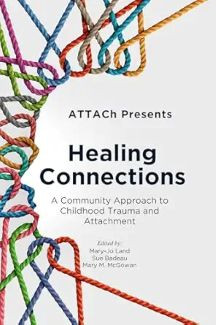 Healing Connections is an essential guide for professionals and caregivers working with children who have complex needs stemming from early trauma, losses, or involvement in the child welfare system. This updated resource builds on prior foundational knowledge to deliver contemporary tools and practices tailored to today's diverse families, including foster and adoptive families. By incorporating insights from a wide range of experts, the book reflects a multi-systemic approach that addresses collective trauma and the crucial role of belonging and community in healing. Aligning with the latest evidence-based practices, Healing Connections emphasizes the importance of staying informed about recent research and advancements in the field. Whether you're a caregiver or a professional supporting children and youth, this book provides valuable knowledge and practical resources to enhance your understanding and effectiveness. Healing Connections aims to enlighten and equip you with essential strategies to foster healing and growth in children facing significant challenges.
 -
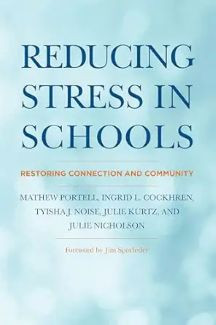 by Mathew Portell, Ingrid L. Cockhren, Tyisha J. Noise, Julie Kurtz, & Julie Nicholson In Reducing Stress in Schools, Mathew Portell, Ingrid L. Cockhren, Tyisha J. Noise, Julie Kurtz, and Julie Nicholson provide a toolkit of actionable, evidence-based practices for PreK–12 teachers, administrators, and staff to support students’ and adults’ nervous system regulation. Rooted in the tenets of trauma-responsive education and current neuroscience, these strategies address stress-related behavioral challenges present in schools, including fight, flight, freeze, and fawn behaviors. Unique in its approach, this book raises awareness of the collective trauma caused by the pandemic, highlights the effects of racial and historical trauma, draws attention to educators' stress and burnout, and proposes strategies for stress reduction drawn from a diverse range of practitioner experience. The authors show that, in the post-COVID-19 era, as students and educators contend with unprecedented exposure to mental health stressors, research supports classroom management via relationship-building interventions. They demonstrate how alternatives to exclusionary discipline practices can promote social-emotional learning, counter learning loss, and improve student skills such as sensory literacy, resilience, and frustration tolerance. This work delivers clear guidance throughout chapters that feature real-world case studies, sample conversations, and questions for reflection and discussion. It also includes recommendations for countering resistance to the implementation of trauma-responsive practices for classroom management. Ultimately, it gives educators the tools to build schools that reduce stress and strengthen racial justice, equity, healing, and safety.
 -
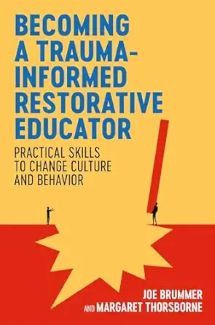 by Joe Brummer & Margaret Thorsborne Maybe you have heard the terms 'trauma-informed' and 'restorative' - but how do you go about becoming a trauma-informed, restorative educator? This practical book outlines the values, ideas and neuroscience behind trauma-informed restorative practice and its proven effectiveness. It clearly explains key theories relating to shame, trauma and your autonomic nervous system, and explains how to apply this knowledge in practice. Examples and stories of restorative practice feature throughout to inspire and emulate, as do practical protocols, tools and systems to develop your skills as a trauma-informed educator. Critically, it also explains the personal and professional qualities you need to nurture to truly engage in trauma-informed, restorative practice, with reflection points to aid learning and self-development. Read this book and take your first steps to creating a trauma-informed, restorative classroom - even if your school isn't doing it!
 -
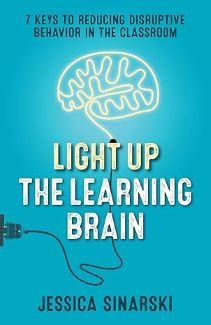 by Jessica Sinarski Learn How the Brain Affects Behavior Are you ready to increase learning opportunities, reduce negative behaviors, and improve staff and student morale? Then it's time to become a brain builder! We all are aware of an alarming increase in reported behavioral disruptions in school settings. Often less understood is the critical role that the brain plays in shaping all behavior, including the challenges we face in our classrooms and beyond. Light Up the Learning Brain illuminates the many ways that teaching through a brain-based lens can breathe new life into your work. In these pages, you will discover:
- how the brain's two main "operating systems" interact - and often compete
- the amygdala's vital role as an alarm system and gatekeeper
- ways that brain function is closely connected to our senses
- the power of play, curiosity, and safety in fostering brain development
- tips, scripts, and tools to make your job easier and more fulfilling