-
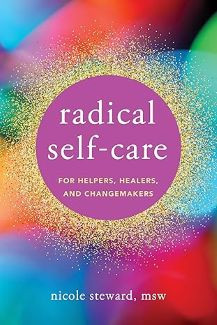 by Nicole Steward Solutions for tackling the deeply-rooted causes of burnout. Radical Self-Care for Helpers, Healers, and Changemakers addresses the constant exposure to heartbreak and injustice that can take a toll on the mental and physical health of those in the helping professions. After more than twenty years as a social worker, author Nicole Steward shares her own challenges with burnout and offers practical solutions to tackle the deeply-rooted causes of overwhelm that helpers face, which include compassion fatigue, vicarious trauma, and moral injury. Steward’s solutions go beyond mere stress-reduction techniques; rather, she offers a framework for engaging in radical self-care. Here readers will discover a way of being that prioritizes helpers and healers, so they can better serve others without sacrificing their own health and wellness. This book offers foundational strategies that challenge the current systems that contribute to the high rates of burnout and turnover in the human and social service professions. By taking radical care of themselves, helpers can take a more effective and resilient approach to their work, ultimately leading to liberation for both themselves and those they serve.
 -
 by Deb Dana Here, for the first time, is a layperson’s explanation of polyvagal theory, an approach to mental health and well-being that has taken the clinical world by storm. A polyvagal approach to life is based on the knowledge that the autonomic nervous system is shaped by early experience and reshaped with ongoing experience. This short book offers an overview for nonspecialist readers and provides a series of exercises and meditations (practices) that allow readers to tune into their nervous systems, providing calming prompts to build and strengthen ventral vagal connections. This book includes a never-before-published comprehensive chapter on polyvagal theory, preceded by exercises that focus on mapping, reflecting, listening, deepening, creating, and connecting. Readers who want to change a pattern and find new rhythm for their nervous systems can use this material to work toward those goals.
 -
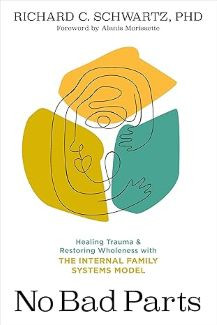 by Richard Schwatrz PhD Discover an empowering new way of understanding your multifaceted mind―and healing the many parts that make you who you are. Is there just one “you”? We’ve been taught to believe we have a single identity, and to feel fear or shame when we can’t control the inner voices that don’t match the ideal of who we think we should be. Yet Dr. Richard Schwartz’s research now challenges this “mono-mind” theory. “All of us are born with many sub-minds―or parts,” says Dr. Schwartz. “These parts are not imaginary or symbolic. They are individuals who exist as an internal family within us―and the key to health and happiness is to honor, understand, and love every part.” Dr. Schwartz’s Internal Family Systems (IFS) model has been transforming psychology for decades. With No Bad Parts, you’ll learn why IFS has been so effective in areas such as trauma recovery, addiction therapy, and depression treatment―and how this new understanding of consciousness has the potential to radically change our lives. Here you’ll explore: • The IFS revolution―how honoring and communicating with our parts changes our approach to mental wellness • Overturning the cultural, scientific, and spiritual assumptions that reinforce an outdated mono-mind model • The ego, the inner critic, the saboteur―making these often-maligned parts into powerful allies • Burdens―why our parts become distorted and stuck in childhood traumas and cultural beliefs • How IFS demonstrates human goodness by revealing that there are no bad parts • The Self―discover your wise, compassionate essence of goodness that is the source of healing and harmony • Exercises for mapping your parts, accessing the Self, working with a challenging protector, identifying each part’s triggers, and more IFS is a paradigm-changing model because it gives us a powerful approach for healing ourselves, our culture, and our planet. As Dr. Schwartz teaches, “Our parts can sometimes be disruptive or harmful, but once they’re unburdened, they return to their essential goodness. When we learn to love all our parts, we can learn to love all people―and that will contribute to healing the world.”
 -
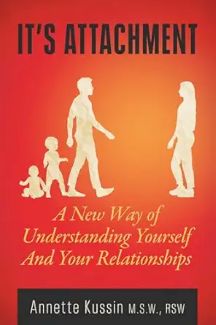 A New Way of Understanding Yourself and Your Relationships by Annette Kussin M.S.W. RSW How do we make sense of our relationships -- successes and failures, preferences and challenges, past and present. And after we make sense of them all -- what do we do to increase the successes that we are striving to attain. In It's Attachment, Kussin offers us a comprehensive overview of this dominant theory of human development and relationships in a way that gives us both understanding and practical ideas for constructive changes. She shows us the central features of the main attachment patterns that are present throughout childhood and adulthood as well as clear suggestions for how we might identify what pattern characterizes our own life. From there, her book provides practical insights into how our attachment pattern is central in our choosing a partner and being a parent. It also explores how we might change our pattern toward one that provides the greatest likelihood for developing an autonomous sense of self and satisfying reciprocal relationships.
 -
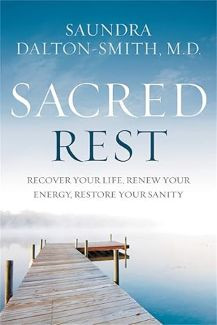 by Dr. Saundra Dalton-Smith Staying busy is easy. Staying well rested-now there's a challenge. Discover how understanding the 7 types of rest can help. How can you keep your energy, happiness, creativity, and relationships fresh and thriving in the midst of never-ending family demands, career pressures, and the stress of everyday life? In Sacred Rest, Dr. Saundra Dalton-Smith, a board-certified internal medicine doctor, reveals why rest can no longer remain optional. Dr. Dalton-Smith shares seven types of rest she has found lacking in the lives of those she encounters in her clinical practice and research-physical, mental, spiritual, emotional, sensory, social, creative-and why a deficiency in any one of these types of rest can have unfavorable effects on your health, happiness, relationships, creativity, and productivity. Sacred Rest combines the science of rest, the spirituality of rest, the gifts of rest, and the resulting fruit of rest. It shows rest as something sacred, valuable, and worthy of our respect. By combining scientific research with personal stories, spiritual insight, and practical next steps, Sacred Rest gives the weary permission to embrace rest, set boundaries, and seek sanctuary without any guilt, shame, or fear.
 -
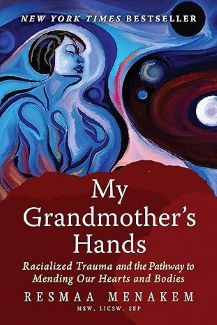 by LICSW Resmaa Menakem, MSW In this groundbreaking book, therapist Resmaa Menakem examines the damage caused by racism in America from the perspective of trauma and body-centered psychology. The body is where our instincts reside and where we fight, flee, or freeze, and it endures the trauma inflicted by the ills that plague society. Menakem argues this destruction will continue until Americans learn to heal the generational anguish of white supremacy, which is deeply embedded in all our bodies. Our collective agony doesn't just affect African Americans. White Americans suffer their own secondary trauma as well. So do blue Americans—our police. My Grandmother's Hands is a call to action for all of us to recognize that racism is not only about the head, but about the body, and introduces an alternative view of what we can do to grow beyond our entrenched racialized divide. Paves the way for a new, body-centered understanding of white supremacy—how it is literally in our blood and our nervous system. Offers a step-by-step healing process based on the latest neuroscience and somatic healing methods, in addition to incisive social commentary.
 -
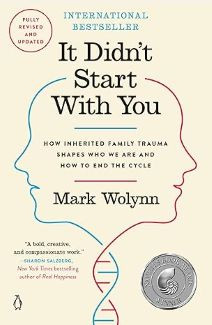 How Inherited Family Trauma Shapes Who We Are and How to End the Cycle by Mark Wolynn It Didn’t Start With You and its companion, The Official It Didn't Start with You Workbook, provide a groundbreaking approach to transforming traumatic legacies passed down in families over generations, by an acclaimed expert in the field Depression. Anxiety. Chronic Pain. Phobias. Obsessive thoughts. The evidence is compelling: the roots of these difficulties may not reside in our immediate life experience or in chemical imbalances in our brains—but in the lives of our parents, grandparents, and even great-grandparents. The latest scientific research, now making headlines, supports what many have long intuited—that traumatic experience can be passed down through generations. It Didn’t Start with You builds on the work of leading experts in post-traumatic stress, including Mount Sinai School of Medicine neuroscientist Rachel Yehuda and psychiatrist Bessel van der Kolk, author of The Body Keeps the Score. Even if the person who suffered the original trauma has died, or the story has been forgotten or silenced, memory and feelings can live on. These emotional legacies are often hidden, encoded in everything from gene expression to everyday language, and they play a far greater role in our emotional and physical health than has ever before been understood. As a pioneer in the field of inherited family trauma, Mark Wolynn has worked with individuals and groups on a therapeutic level for over twenty years. It Didn’t Start with You offers a pragmatic and prescriptive guide to his method, the Core Language Approach. Diagnostic self-inventories provide a way to uncover the fears and anxieties conveyed through everyday words, behaviors, and physical symptoms. Techniques for developing a genogram or extended family tree create a map of experiences going back through the generations. And visualization, active imagination, and direct dialogue create pathways to reconnection, integration, and reclaiming life and health. It Didn’t Start With You is a transformative approach to resolving longstanding difficulties that in many cases, traditional therapy, drugs, or other interventions have not had the capacity to touch.