-
 Healing Connections is an essential guide for professionals and caregivers working with children who have complex needs stemming from early trauma, losses, or involvement in the child welfare system. This updated resource builds on prior foundational knowledge to deliver contemporary tools and practices tailored to today's diverse families, including foster and adoptive families. By incorporating insights from a wide range of experts, the book reflects a multi-systemic approach that addresses collective trauma and the crucial role of belonging and community in healing. Aligning with the latest evidence-based practices, Healing Connections emphasizes the importance of staying informed about recent research and advancements in the field. Whether you're a caregiver or a professional supporting children and youth, this book provides valuable knowledge and practical resources to enhance your understanding and effectiveness. Healing Connections aims to enlighten and equip you with essential strategies to foster healing and growth in children facing significant challenges.
 -
 by Dr. Barbara Sorrels and Cathy Chalmers, M.A. Once you understand attachment, parenting makes a lot more sense. The basics of child development, and the importance of attachment, will equip you to create meaningful and secure relationships that last a lifetime. You’ll discover:
- What is healthy attachment How to nurture connection in various ages and stages
- The crucial differences between punishment and discipline
- How child development research aligns with biblical truth
-
 by Bessel van der Kolk M.D. Trauma is a fact of life. Veterans and their families deal with the painful aftermath of combat; one in five Americans has been molested; one in four grew up with alcoholics; one in three couples have engaged in physical violence. Dr. Bessel van der Kolk, one of the world’s foremost experts on trauma, has spent over three decades working with survivors. In The Body Keeps the Score, he uses recent scientific advances to show how trauma literally reshapes both body and brain, compromising sufferers’ capacities for pleasure, engagement, self-control, and trust. He explores innovative treatments—from neurofeedback and meditation to sports, drama, and yoga—that offer new paths to recovery by activating the brain’s natural neuroplasticity. Based on Dr. van der Kolk’s own research and that of other leading specialists, The Body Keeps the Score exposes the tremendous power of our relationships both to hurt and to heal—and offers new hope for reclaiming lives.
 -
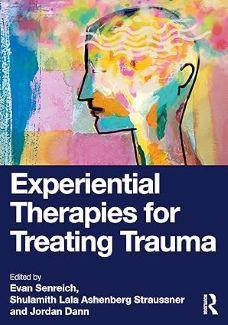 Edited by Evan Senreich, Shulamith Lala Ashenberg Straussner, & Jordan Dann Experiential Therapies for Treating Trauma offers 17 chapters, with 15 of them focusing on a different experiential psychotherapy for treating trauma, written by clinicians with expertise in that modality. No other book contains descriptions of such a wide array of experiential therapies under one cover. Readers will obtain both a comprehensive overview of the many experiential therapies that are currently utilized and specific knowledge regarding how to utilize each of them in psychotherapy practice. The authors of each chapter emphasize that in working with clients impacted by trauma, there is a need for the use of therapeutic modalities that go beyond the cognitive processes central to talk therapy and incorporate more holistic, sensory approaches that emphasize the building of a strong relationship between the client and therapist. Both experienced clinicians and students will find this book to be an invaluable resource to enhance their knowledge of how to use experiential therapies and to motivate them to obtain advanced training in modalities that spark their interest.
 -

by Stephen W. Porges PhD This book compiles, for the first time, Stephen W. Porges’s decades of research. A leading expert in developmental psychophysiology and developmental behavioral neuroscience, Porges is the mind behind the groundbreaking Polyvagal Theory, which has startling implications for the treatment of anxiety, depression, trauma, and autism. Adopted by clinicians around the world, the Polyvagal Theory has provided exciting new insights into the way our autonomic nervous system unconsciously mediates social engagement, trust, and intimacy.
-
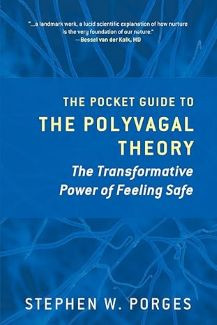 Bridging the gap between research, science, and the therapy room. by Stephen W. Porges PhD When The Polyvagal Theory was published in 2011, it took the therapeutic world by storm, bringing Stephen Porges’s insights about the autonomic nervous system to a clinical audience interested in understanding trauma, anxiety, depression and other mental health issues. The book made accessible to clinicians and other professionals a polyvagal perspective that provided new concepts and insights for understanding human behavior. The perspective placed an emphasis on the important link between psychological experiences and physical manifestations in the body. That book was brilliant but also quite challenging to read for some. Since publication of that book, Stephen Porges has been urged to make these ideas more accessible and The Pocket Guide to the Polyvagal Theory is the result. Constructs and concepts embedded in polyvagal theory are explained conversationally in The Pocket Guide and there is an introductory chapter which discusses the science and the scientific culture in which polyvagal theory was originally developed. Publication of this work enables Stephen Porges to expand the meaning and clinical relevance of this groundbreaking theory. ---
 -
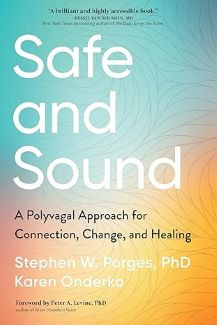 by Stephen Porges PhD and Karen Onderko; Foreword by Peter A. Levine PhD We all want to live and share our truth, but when we don’t feel safe, it can be impossible to fully express or even know who we really are. The nervous system impacts daily well-being, to our benefit or detriment. Understanding how may be key to truly knowing yourself and better supporting the challenges holding you back. “When the nervous system regains its capacity to feel safe,” say Porges and Onderko, “individuals can express themselves genuinely, engage comfortably with others, and embrace a life of greater openness and ease.” The Safe and Sound Protocol (SSP) is a groundbreaking therapy based in Polyvagal Theory, which looks at the role the autonomic nervous system and vagus nerve play in regulating health and behavior. SSP involves listening to music that’s been filtered to prioritize frequencies of human speech, providing auditory input that enables the nervous system to reset to its homeostatic state. Porges and Onderko offer a glimpse into this innovative approach, highlighting not only the origin of SSP and its best practices but also real-life stories of transformation. They showcase clinical evidence demonstrating SSP’s impact on emotional dysregulation, social interaction difficulty, and auditory sensitivity, providing a comprehensive understanding of its therapeutic potential. Some features and conditions addressed include: • Depression • Perfectionism • Addiction • Suicidal ideation • COVID recovery • Navigating gender identity • Living with Parkinson’s disease • Hypermobility • Autism • ADHD • Dyslexia Whether patient, family member, friend, or clinician, you’ll find a deeper understanding of the nervous system and tools for a more resilient experience. Illustrating the incredible range of application and how autonomic regulation can lead to significant improvements―from stress and anxiety to grief and trauma―Safe and Sound demonstrates how SSP can promote a state of safety and calm, facilitating the foundation for long-awaited healing.
 -
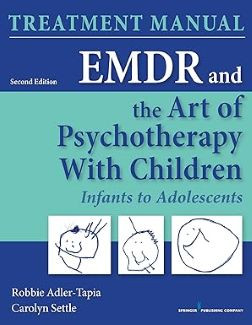 by Robbie Adler-Tapia (Author), Robbie - Adler-Tapia PhD (Editor) Expanded to include EMDR therapy with infants to adolescents, this updated and revised manual--the only resource of its kind--accompanies the new second edition of the widely praised foundational text, EMDR and the Art of Psychotherapy With Children. The manual distills simple and practical ways to employ EMDR therapy scripted protocols and forms to effectively utilize the entire EMDR therapy eight-phased treatment with infants, toddlers, young children, preteens, and teens from a developmental perspective. It is organized in accordance with the book and provides step-by-step directions, session protocols, scripts, and forms for each phase of the protocol, along with instructions for integrating techniques and tools from play, art, sand tray, and other helpful therapies. The manual mirrors revisions to the text including changes to the phases of EMDR therapy and target identification and the integration of developmental theory into EMDR therapy for use with infants to adolescents. Additional revisions include coverage of new specialties and updated protocols, the presentation of breakthrough narrative concepts, new resources and scripts, guidance for the use of EMDR therapy with specialty populations, and new case studies of infants, toddlers, preteens, and adolescents. The manual will greatly assist therapists in their goal of providing best practices for children in need of expert psychotherapy.
 -
 by Mathew Portell, Incrid L. Cockhren, Tyisha J. Noise, Julie Kurtz, Julie Nicholson
 -
 by Richard C. Schwartz & Martha Sweezy IFS reveals how the subpersonalities or "parts" of each individual's psyche relate to each other like members of a family, and how--just as in a family--polarization among parts can lead to emotional suffering. IFS originator Richard Schwartz and master clinician Martha Sweezy explain core concepts and provide practical guidelines for implementing IFS with clients who are struggling with trauma, anxiety, depression, eating disorders, addiction, and other behavioral problems. They also address strategies for treating families and couples.