-
 Healing Connections is an essential guide for professionals and caregivers working with children who have complex needs stemming from early trauma, losses, or involvement in the child welfare system. This updated resource builds on prior foundational knowledge to deliver contemporary tools and practices tailored to today's diverse families, including foster and adoptive families. By incorporating insights from a wide range of experts, the book reflects a multi-systemic approach that addresses collective trauma and the crucial role of belonging and community in healing. Aligning with the latest evidence-based practices, Healing Connections emphasizes the importance of staying informed about recent research and advancements in the field. Whether you're a caregiver or a professional supporting children and youth, this book provides valuable knowledge and practical resources to enhance your understanding and effectiveness. Healing Connections aims to enlighten and equip you with essential strategies to foster healing and growth in children facing significant challenges.
 -
 If you are a parent, or you are supporting a parent, whose child experienced trauma or neglect in early childhood, Hope for Healing: A Parent’s Guide to Trauma and Attachment may hold the answers to many of your questions. This thoughtful guide, written by therapists and parents who live and work with children who have a disorder or disturbance of attachment, will help parents, family members, educators, and others learn to support children on their path to healthy, loving and trusting relationships. The six-hour DVD was designed to be used in support group settings and by therapists in the training of caretakers.
 -

 “I Survived ATTACh 2025” Premium T-Shirt Did you brave the elements at ATTACh’s 2025 Conference in Nashville, TN? By popular demand we have designed our ATTACh 2025 "Inclement Weather Edition" T-Shirt – a lighthearted nod to the unforgettable weather that tried (but failed!) to dampen our spirits at this year’s conference. Whether you were caught in the downpour, dodging wind gusts, or huddled in the ballroom, this shirt commemorates the shared experience with humor and heart. Crafted from Jerzees® Premium Blend fabric, this shirt is built to last – just like you.
- 5.2-oz 50/50 carded ringspun cotton/polyester jersey blend for a soft, breathable feel
- Moisture-wicking to keep you cool no matter the forecast
- Rib-knit crewneck collar and shoulder-to-shoulder taping for comfort and durability
-
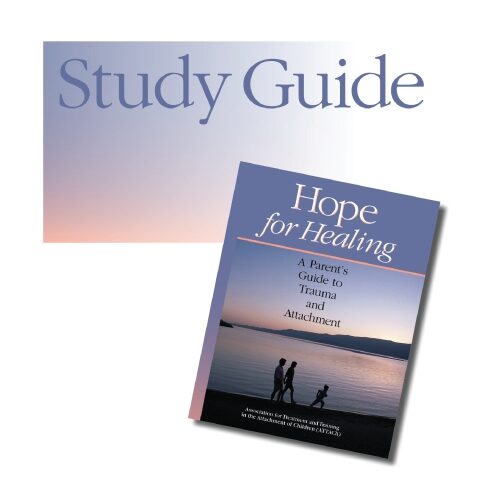 A companion piece useful for working through Hope For Healing.
 -
Out of stock
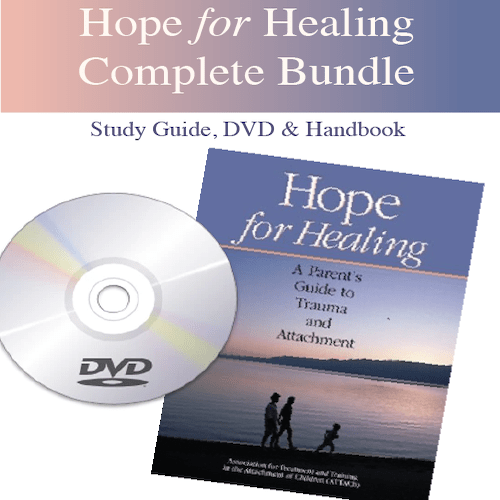
The six-hour DVD follows the topics introduced in ATTACh's book Hope for Healing: A handbook for parents of children who have disorders of attachment. The accompanying Study Guide can also be used as a springboard for discussion of the issues and techniques presented. The presenter is Mary M. McGowan, Executive Director of ATTACh and adoptive parent of five. This DVD will help parents, family members, educators, and others learn to support children on their path to healthy, loving, and trusting relationships.
-
Sale!Out of stock
 The six-hour DVD follows the topics introduced in ATTACh’s book Hope for Healing: A handbook for parents of children who have disorders of attachment.
 -
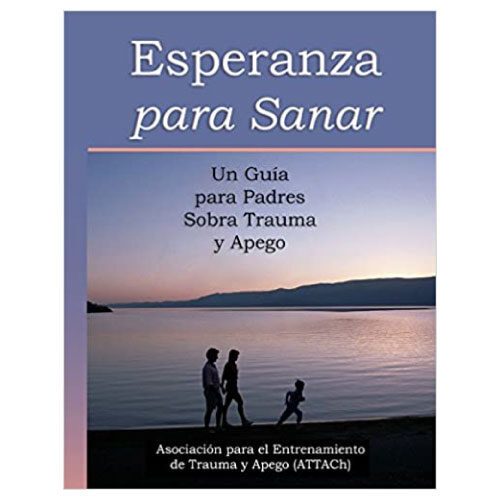 Si usted es un padre, o apoya a un padre cuyo hijo sufrió trauma o abandono en su infancia, Esperanza para sanar: una guía para padres sobre el trauma y apego puede contener las respuestas a muchas de sus preguntas. Esta guía reflexiva, escrita por terapeutas y padres que viven y trabajan con niños que tienen un trastorno o alteración del apego, ayudará a los padres, familiares, educadores y otros a aprender a apoyar a los niños en su camino hacia relaciones sanas, amorosas y de confianza. Buy on Amazon
 -
Healing Trauma Through Sensory Integration and Occupational Therapy Treatment
2 Session Training Starts: Wednesday, September 7, 2016 7:30 pm – 9 pm CST ** after adding, click on View Cart to complete payment -
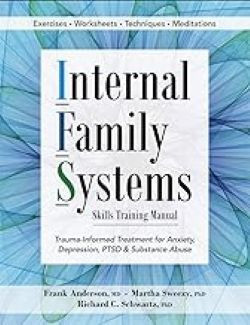 by Frank Anderson, Richard Schwartz, & Martha Sweezy Using a non-pathologizing, accelerated approach -- rooted in neuroscience -- IFS applies inner resources and self-compassion for healing emotional wounding at its core. This new manual offers straight-forward explanations and illustrates a wide variety of applications. Easy to read and highly practical. - Step-by-step techniques - Annotated case examples - Unique meditations - Downloadable exercises, worksheets IFS is Evidence-Based Thirty years ago, IFS creator Richard Schwartz, PhD, listened to his clients describing the behaviors and fears of their most extreme parts. he found that the inner world of all his clients was characterized by parts who have a positive intent for the client but had taken on extreme roles in an effort to be safe. He also discovered that these extreme parts would become less disruptive and more cooperative once their concerns were addressed and they felt safer. IFS views psychic multiplicity as the norm: we all have parts. In addition, every part has a good intention for the client, and every part has value. When clients listen to all their parts, they can heal their wounded parts. Today, IFS, which has established a legacy of efficiency and effectiveness in treating many mental health issues, is being heralded by Dr. Bessel van der Kolk as a treatment that all clinicians should know.
 -
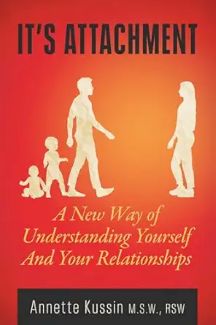 A New Way of Understanding Yourself and Your Relationships by Annette Kussin M.S.W. RSW How do we make sense of our relationships -- successes and failures, preferences and challenges, past and present. And after we make sense of them all -- what do we do to increase the successes that we are striving to attain. In It's Attachment, Kussin offers us a comprehensive overview of this dominant theory of human development and relationships in a way that gives us both understanding and practical ideas for constructive changes. She shows us the central features of the main attachment patterns that are present throughout childhood and adulthood as well as clear suggestions for how we might identify what pattern characterizes our own life. From there, her book provides practical insights into how our attachment pattern is central in our choosing a partner and being a parent. It also explores how we might change our pattern toward one that provides the greatest likelihood for developing an autonomous sense of self and satisfying reciprocal relationships.
 -
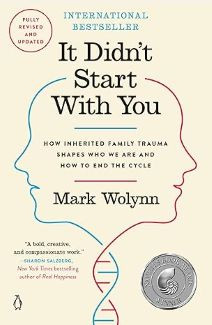 How Inherited Family Trauma Shapes Who We Are and How to End the Cycle by Mark Wolynn It Didn’t Start With You and its companion, The Official It Didn't Start with You Workbook, provide a groundbreaking approach to transforming traumatic legacies passed down in families over generations, by an acclaimed expert in the field Depression. Anxiety. Chronic Pain. Phobias. Obsessive thoughts. The evidence is compelling: the roots of these difficulties may not reside in our immediate life experience or in chemical imbalances in our brains—but in the lives of our parents, grandparents, and even great-grandparents. The latest scientific research, now making headlines, supports what many have long intuited—that traumatic experience can be passed down through generations. It Didn’t Start with You builds on the work of leading experts in post-traumatic stress, including Mount Sinai School of Medicine neuroscientist Rachel Yehuda and psychiatrist Bessel van der Kolk, author of The Body Keeps the Score. Even if the person who suffered the original trauma has died, or the story has been forgotten or silenced, memory and feelings can live on. These emotional legacies are often hidden, encoded in everything from gene expression to everyday language, and they play a far greater role in our emotional and physical health than has ever before been understood. As a pioneer in the field of inherited family trauma, Mark Wolynn has worked with individuals and groups on a therapeutic level for over twenty years. It Didn’t Start with You offers a pragmatic and prescriptive guide to his method, the Core Language Approach. Diagnostic self-inventories provide a way to uncover the fears and anxieties conveyed through everyday words, behaviors, and physical symptoms. Techniques for developing a genogram or extended family tree create a map of experiences going back through the generations. And visualization, active imagination, and direct dialogue create pathways to reconnection, integration, and reclaiming life and health. It Didn’t Start With You is a transformative approach to resolving longstanding difficulties that in many cases, traditional therapy, drugs, or other interventions have not had the capacity to touch.
 -
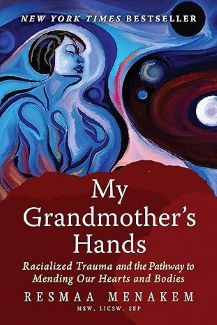 by LICSW Resmaa Menakem, MSW In this groundbreaking book, therapist Resmaa Menakem examines the damage caused by racism in America from the perspective of trauma and body-centered psychology. The body is where our instincts reside and where we fight, flee, or freeze, and it endures the trauma inflicted by the ills that plague society. Menakem argues this destruction will continue until Americans learn to heal the generational anguish of white supremacy, which is deeply embedded in all our bodies. Our collective agony doesn't just affect African Americans. White Americans suffer their own secondary trauma as well. So do blue Americans—our police. My Grandmother's Hands is a call to action for all of us to recognize that racism is not only about the head, but about the body, and introduces an alternative view of what we can do to grow beyond our entrenched racialized divide. Paves the way for a new, body-centered understanding of white supremacy—how it is literally in our blood and our nervous system. Offers a step-by-step healing process based on the latest neuroscience and somatic healing methods, in addition to incisive social commentary.
 -
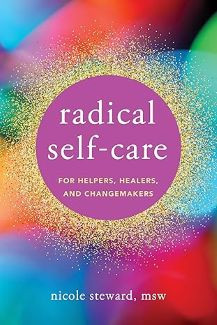 by Nicole Steward Solutions for tackling the deeply-rooted causes of burnout. Radical Self-Care for Helpers, Healers, and Changemakers addresses the constant exposure to heartbreak and injustice that can take a toll on the mental and physical health of those in the helping professions. After more than twenty years as a social worker, author Nicole Steward shares her own challenges with burnout and offers practical solutions to tackle the deeply-rooted causes of overwhelm that helpers face, which include compassion fatigue, vicarious trauma, and moral injury. Steward’s solutions go beyond mere stress-reduction techniques; rather, she offers a framework for engaging in radical self-care. Here readers will discover a way of being that prioritizes helpers and healers, so they can better serve others without sacrificing their own health and wellness. This book offers foundational strategies that challenge the current systems that contribute to the high rates of burnout and turnover in the human and social service professions. By taking radical care of themselves, helpers can take a more effective and resilient approach to their work, ultimately leading to liberation for both themselves and those they serve.
 -
 by Deb Dana Here, for the first time, is a layperson’s explanation of polyvagal theory, an approach to mental health and well-being that has taken the clinical world by storm. A polyvagal approach to life is based on the knowledge that the autonomic nervous system is shaped by early experience and reshaped with ongoing experience. This short book offers an overview for nonspecialist readers and provides a series of exercises and meditations (practices) that allow readers to tune into their nervous systems, providing calming prompts to build and strengthen ventral vagal connections. This book includes a never-before-published comprehensive chapter on polyvagal theory, preceded by exercises that focus on mapping, reflecting, listening, deepening, creating, and connecting. Readers who want to change a pattern and find new rhythm for their nervous systems can use this material to work toward those goals.
 -
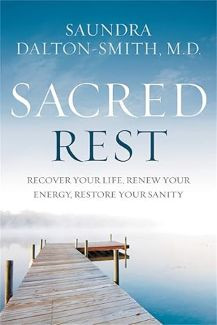 by Dr. Saundra Dalton-Smith Staying busy is easy. Staying well rested-now there's a challenge. Discover how understanding the 7 types of rest can help. How can you keep your energy, happiness, creativity, and relationships fresh and thriving in the midst of never-ending family demands, career pressures, and the stress of everyday life? In Sacred Rest, Dr. Saundra Dalton-Smith, a board-certified internal medicine doctor, reveals why rest can no longer remain optional. Dr. Dalton-Smith shares seven types of rest she has found lacking in the lives of those she encounters in her clinical practice and research-physical, mental, spiritual, emotional, sensory, social, creative-and why a deficiency in any one of these types of rest can have unfavorable effects on your health, happiness, relationships, creativity, and productivity. Sacred Rest combines the science of rest, the spirituality of rest, the gifts of rest, and the resulting fruit of rest. It shows rest as something sacred, valuable, and worthy of our respect. By combining scientific research with personal stories, spiritual insight, and practical next steps, Sacred Rest gives the weary permission to embrace rest, set boundaries, and seek sanctuary without any guilt, shame, or fear.
 -
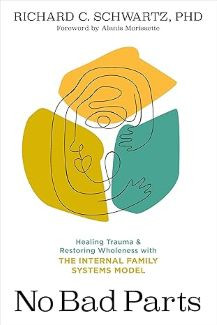 by Richard Schwatrz PhD Discover an empowering new way of understanding your multifaceted mind―and healing the many parts that make you who you are. Is there just one “you”? We’ve been taught to believe we have a single identity, and to feel fear or shame when we can’t control the inner voices that don’t match the ideal of who we think we should be. Yet Dr. Richard Schwartz’s research now challenges this “mono-mind” theory. “All of us are born with many sub-minds―or parts,” says Dr. Schwartz. “These parts are not imaginary or symbolic. They are individuals who exist as an internal family within us―and the key to health and happiness is to honor, understand, and love every part.” Dr. Schwartz’s Internal Family Systems (IFS) model has been transforming psychology for decades. With No Bad Parts, you’ll learn why IFS has been so effective in areas such as trauma recovery, addiction therapy, and depression treatment―and how this new understanding of consciousness has the potential to radically change our lives. Here you’ll explore: • The IFS revolution―how honoring and communicating with our parts changes our approach to mental wellness • Overturning the cultural, scientific, and spiritual assumptions that reinforce an outdated mono-mind model • The ego, the inner critic, the saboteur―making these often-maligned parts into powerful allies • Burdens―why our parts become distorted and stuck in childhood traumas and cultural beliefs • How IFS demonstrates human goodness by revealing that there are no bad parts • The Self―discover your wise, compassionate essence of goodness that is the source of healing and harmony • Exercises for mapping your parts, accessing the Self, working with a challenging protector, identifying each part’s triggers, and more IFS is a paradigm-changing model because it gives us a powerful approach for healing ourselves, our culture, and our planet. As Dr. Schwartz teaches, “Our parts can sometimes be disruptive or harmful, but once they’re unburdened, they return to their essential goodness. When we learn to love all our parts, we can learn to love all people―and that will contribute to healing the world.”
 -

by Stephen W. Porges PhD This book compiles, for the first time, Stephen W. Porges’s decades of research. A leading expert in developmental psychophysiology and developmental behavioral neuroscience, Porges is the mind behind the groundbreaking Polyvagal Theory, which has startling implications for the treatment of anxiety, depression, trauma, and autism. Adopted by clinicians around the world, the Polyvagal Theory has provided exciting new insights into the way our autonomic nervous system unconsciously mediates social engagement, trust, and intimacy.
-
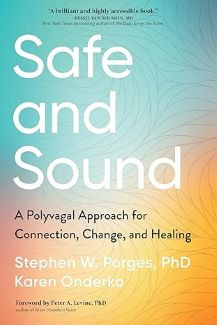 by Stephen Porges PhD and Karen Onderko; Foreword by Peter A. Levine PhD We all want to live and share our truth, but when we don’t feel safe, it can be impossible to fully express or even know who we really are. The nervous system impacts daily well-being, to our benefit or detriment. Understanding how may be key to truly knowing yourself and better supporting the challenges holding you back. “When the nervous system regains its capacity to feel safe,” say Porges and Onderko, “individuals can express themselves genuinely, engage comfortably with others, and embrace a life of greater openness and ease.” The Safe and Sound Protocol (SSP) is a groundbreaking therapy based in Polyvagal Theory, which looks at the role the autonomic nervous system and vagus nerve play in regulating health and behavior. SSP involves listening to music that’s been filtered to prioritize frequencies of human speech, providing auditory input that enables the nervous system to reset to its homeostatic state. Porges and Onderko offer a glimpse into this innovative approach, highlighting not only the origin of SSP and its best practices but also real-life stories of transformation. They showcase clinical evidence demonstrating SSP’s impact on emotional dysregulation, social interaction difficulty, and auditory sensitivity, providing a comprehensive understanding of its therapeutic potential. Some features and conditions addressed include: • Depression • Perfectionism • Addiction • Suicidal ideation • COVID recovery • Navigating gender identity • Living with Parkinson’s disease • Hypermobility • Autism • ADHD • Dyslexia Whether patient, family member, friend, or clinician, you’ll find a deeper understanding of the nervous system and tools for a more resilient experience. Illustrating the incredible range of application and how autonomic regulation can lead to significant improvements―from stress and anxiety to grief and trauma―Safe and Sound demonstrates how SSP can promote a state of safety and calm, facilitating the foundation for long-awaited healing.
 -
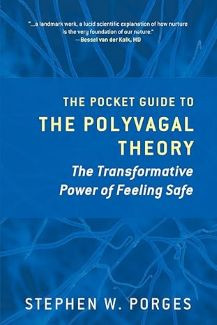 Bridging the gap between research, science, and the therapy room. by Stephen W. Porges PhD When The Polyvagal Theory was published in 2011, it took the therapeutic world by storm, bringing Stephen Porges’s insights about the autonomic nervous system to a clinical audience interested in understanding trauma, anxiety, depression and other mental health issues. The book made accessible to clinicians and other professionals a polyvagal perspective that provided new concepts and insights for understanding human behavior. The perspective placed an emphasis on the important link between psychological experiences and physical manifestations in the body. That book was brilliant but also quite challenging to read for some. Since publication of that book, Stephen Porges has been urged to make these ideas more accessible and The Pocket Guide to the Polyvagal Theory is the result. Constructs and concepts embedded in polyvagal theory are explained conversationally in The Pocket Guide and there is an introductory chapter which discusses the science and the scientific culture in which polyvagal theory was originally developed. Publication of this work enables Stephen Porges to expand the meaning and clinical relevance of this groundbreaking theory. ---
 -
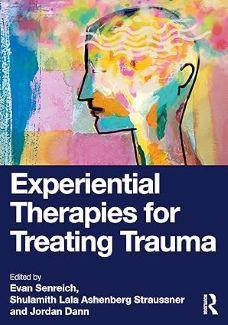 Edited by Evan Senreich, Shulamith Lala Ashenberg Straussner, & Jordan Dann Experiential Therapies for Treating Trauma offers 17 chapters, with 15 of them focusing on a different experiential psychotherapy for treating trauma, written by clinicians with expertise in that modality. No other book contains descriptions of such a wide array of experiential therapies under one cover. Readers will obtain both a comprehensive overview of the many experiential therapies that are currently utilized and specific knowledge regarding how to utilize each of them in psychotherapy practice. The authors of each chapter emphasize that in working with clients impacted by trauma, there is a need for the use of therapeutic modalities that go beyond the cognitive processes central to talk therapy and incorporate more holistic, sensory approaches that emphasize the building of a strong relationship between the client and therapist. Both experienced clinicians and students will find this book to be an invaluable resource to enhance their knowledge of how to use experiential therapies and to motivate them to obtain advanced training in modalities that spark their interest.
 -
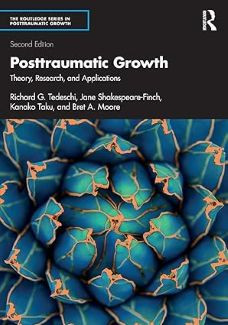 by Mathew Portell, Incrid L. Cockhren, Tyisha J. Noise, Julie Kurtz, Julie Nicholson
 -
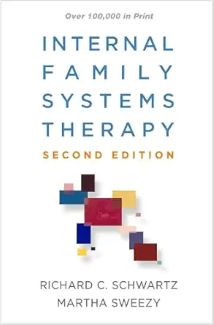 by Richard C. Schwartz & Martha Sweezy IFS reveals how the subpersonalities or "parts" of each individual's psyche relate to each other like members of a family, and how--just as in a family--polarization among parts can lead to emotional suffering. IFS originator Richard Schwartz and master clinician Martha Sweezy explain core concepts and provide practical guidelines for implementing IFS with clients who are struggling with trauma, anxiety, depression, eating disorders, addiction, and other behavioral problems. They also address strategies for treating families and couples.