-
 by Mathew Portell, Incrid L. Cockhren, Tyisha J. Noise, Julie Kurtz, Julie Nicholson
 -
 by Richard C. Schwartz & Martha Sweezy IFS reveals how the subpersonalities or "parts" of each individual's psyche relate to each other like members of a family, and how--just as in a family--polarization among parts can lead to emotional suffering. IFS originator Richard Schwartz and master clinician Martha Sweezy explain core concepts and provide practical guidelines for implementing IFS with clients who are struggling with trauma, anxiety, depression, eating disorders, addiction, and other behavioral problems. They also address strategies for treating families and couples.
 -
 by Robbie Adler-Tapia (Author), Robbie - Adler-Tapia PhD (Editor) Expanded to include EMDR therapy with infants to adolescents, this updated and revised manual--the only resource of its kind--accompanies the new second edition of the widely praised foundational text, EMDR and the Art of Psychotherapy With Children. The manual distills simple and practical ways to employ EMDR therapy scripted protocols and forms to effectively utilize the entire EMDR therapy eight-phased treatment with infants, toddlers, young children, preteens, and teens from a developmental perspective. It is organized in accordance with the book and provides step-by-step directions, session protocols, scripts, and forms for each phase of the protocol, along with instructions for integrating techniques and tools from play, art, sand tray, and other helpful therapies. The manual mirrors revisions to the text including changes to the phases of EMDR therapy and target identification and the integration of developmental theory into EMDR therapy for use with infants to adolescents. Additional revisions include coverage of new specialties and updated protocols, the presentation of breakthrough narrative concepts, new resources and scripts, guidance for the use of EMDR therapy with specialty populations, and new case studies of infants, toddlers, preteens, and adolescents. The manual will greatly assist therapists in their goal of providing best practices for children in need of expert psychotherapy.
 -
 by Mathew Portell, Ingrid L. Cockhren, Tyisha J. Noise, Julie Kurtz, & Julie Nicholson In Reducing Stress in Schools, Mathew Portell, Ingrid L. Cockhren, Tyisha J. Noise, Julie Kurtz, and Julie Nicholson provide a toolkit of actionable, evidence-based practices for PreK–12 teachers, administrators, and staff to support students’ and adults’ nervous system regulation. Rooted in the tenets of trauma-responsive education and current neuroscience, these strategies address stress-related behavioral challenges present in schools, including fight, flight, freeze, and fawn behaviors. Unique in its approach, this book raises awareness of the collective trauma caused by the pandemic, highlights the effects of racial and historical trauma, draws attention to educators' stress and burnout, and proposes strategies for stress reduction drawn from a diverse range of practitioner experience. The authors show that, in the post-COVID-19 era, as students and educators contend with unprecedented exposure to mental health stressors, research supports classroom management via relationship-building interventions. They demonstrate how alternatives to exclusionary discipline practices can promote social-emotional learning, counter learning loss, and improve student skills such as sensory literacy, resilience, and frustration tolerance. This work delivers clear guidance throughout chapters that feature real-world case studies, sample conversations, and questions for reflection and discussion. It also includes recommendations for countering resistance to the implementation of trauma-responsive practices for classroom management. Ultimately, it gives educators the tools to build schools that reduce stress and strengthen racial justice, equity, healing, and safety.
 -
 by Jessica Sinarski Learn How the Brain Affects Behavior Are you ready to increase learning opportunities, reduce negative behaviors, and improve staff and student morale? Then it's time to become a brain builder! We all are aware of an alarming increase in reported behavioral disruptions in school settings. Often less understood is the critical role that the brain plays in shaping all behavior, including the challenges we face in our classrooms and beyond. Light Up the Learning Brain illuminates the many ways that teaching through a brain-based lens can breathe new life into your work. In these pages, you will discover:
- how the brain's two main "operating systems" interact - and often compete
- the amygdala's vital role as an alarm system and gatekeeper
- ways that brain function is closely connected to our senses
- the power of play, curiosity, and safety in fostering brain development
- tips, scripts, and tools to make your job easier and more fulfilling
-
 by Joe Brummer & Margaret Thorsborne Maybe you have heard the terms 'trauma-informed' and 'restorative' - but how do you go about becoming a trauma-informed, restorative educator? This practical book outlines the values, ideas and neuroscience behind trauma-informed restorative practice and its proven effectiveness. It clearly explains key theories relating to shame, trauma and your autonomic nervous system, and explains how to apply this knowledge in practice. Examples and stories of restorative practice feature throughout to inspire and emulate, as do practical protocols, tools and systems to develop your skills as a trauma-informed educator. Critically, it also explains the personal and professional qualities you need to nurture to truly engage in trauma-informed, restorative practice, with reflection points to aid learning and self-development. Read this book and take your first steps to creating a trauma-informed, restorative classroom - even if your school isn't doing it!
 -
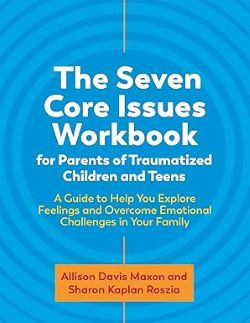 By Sharon Roszia and Allison Davis Maxon Based on a hugely successful US model, The Seven Core Issues Workbook is accessible and parent-friendly with brief explanations, activities and exercises. The Seven Core Issues are Loss, Rejection, Shame/Guilt, Grief, Identity, Intimacy and Mastery/Control. The workbook gives parents the ability to explore their own issues as well as their child's through varies experiential exercise and activities. Parents can identify and address their core issues in order to more effectively assist and support the child's core issues. The workbook and its exercises allow for a variety of diverse groups to use the book with ease, making it the essential tool for all individuals to grow and heal themselves and their families.
 -
 by Sarah Lloyd Does your child struggle to know how their body is feeling? Do they find it hard to balance or feel uneasy when their feet leave the ground? Early trauma and neglect can have a profound effect upon a child's development. Sensory integration theory offers a way of understanding how the brain processes and stores movement experience, and how these experiences manifest at a physical and emotional level. This book explains how early movement experiences affect brain development and gives examples of how trauma can prevent basic sensory processing pathways from being correctly established. It shows how you can identify gaps in normal sensory development and offers ideas for how you can use physical activities to help build up the underdeveloped systems. Good bodily awareness forms the foundation of motor development as well as social and emotional skills and learning. This book will help your child to be more in tune with themselves and their bodies and feel more comfortable in their environment. Highly accessible with lots of practical tips and examples, this book is written for adoptive and foster parents, and will also be useful for social workers, fostering and adoption workers and those working in primary and early years educational settings.
 -
 by Robyn Gobbel "All behavior makes sense" '"It most certainly does not!", is probably your first reaction. Parenting and neuroscience expert Robyn Gobbel is here to reveal how all behavior, no matter how baffling, can be explained and remedied. You just need to look past the behavior and understand what's going on inside. Robyn decodes the latest brain science into easy-to-understand principles and metaphors to help you become an expert in your child's behavior. She reveals simple ways to help you regulate and connect with your child, with brain-, body- and sensory-based strategies to overcome day-to-day challenges. She also provides you with the knowledge to understand and regulate your own brain so that you don't flip your lid when your child flips theirs. Let this be your lifeline for parenting or caring for any child with baffling behaviors and hidden challenges, including kids who have experienced adversity, or with additional needs.
 -
 by Allison Davis Maxon, illustrated by Liza Stevens Based on the pioneering Seven Core Issues model, this resource is an accessible and age-appropriate way to support children and teens who have experienced early adversity, to strengthen understanding and healing. The Seven Core Issues are Loss, Rejection, Shame/Guilt, Grief, Identity, Intimacy and Mastery/Control. This resource combines two separate interactive workbooks - one for children developmentally aged 5-11, the other for children developmentally aged 12+. These can be filled in, photocopied or downloaded and provide a structured way for children and teens to explore their feelings and beliefs using exercises and activities. An ideal accompaniment to the Seven Core Issues Workbook for Parents of Traumatized Children and Teens, this resource will be valued by all adults supporting children who have experienced early adversity.