-
 by Dr. Saundra Dalton-Smith Staying busy is easy. Staying well rested-now there's a challenge. Discover how understanding the 7 types of rest can help. How can you keep your energy, happiness, creativity, and relationships fresh and thriving in the midst of never-ending family demands, career pressures, and the stress of everyday life? In Sacred Rest, Dr. Saundra Dalton-Smith, a board-certified internal medicine doctor, reveals why rest can no longer remain optional. Dr. Dalton-Smith shares seven types of rest she has found lacking in the lives of those she encounters in her clinical practice and research-physical, mental, spiritual, emotional, sensory, social, creative-and why a deficiency in any one of these types of rest can have unfavorable effects on your health, happiness, relationships, creativity, and productivity. Sacred Rest combines the science of rest, the spirituality of rest, the gifts of rest, and the resulting fruit of rest. It shows rest as something sacred, valuable, and worthy of our respect. By combining scientific research with personal stories, spiritual insight, and practical next steps, Sacred Rest gives the weary permission to embrace rest, set boundaries, and seek sanctuary without any guilt, shame, or fear.
 -
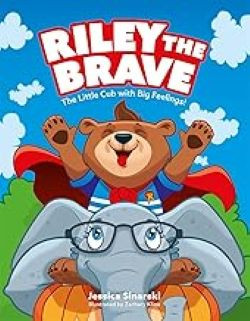
by Jessica Sinarski, illustrated by Zachary Kline Riley the Brave is the story of a little bear with big feelings! Join this super-cool, cape-wearing cub as he embarks on a journey to face his fears. Riley is joined by all of his animal friends who care for him as he faces his difficult feelings. Along the way, Riley learns how sometimes, being tough or loud isn't the bravest thing to be - sometimes it's asking for help, or being brave enough to let someone into your heart. Written for any child who is looking to unlock their inner courage, and particularly those healing from difficult life experiences or trauma, this book creates a safe space for conversations about complex thoughts and feelings. It also features an educational afterword for grown-ups which explains how the book helps children, and how to get the most out of it.
-
 by Sarah Lloyd Does your child struggle to know how their body is feeling? Do they find it hard to balance or feel uneasy when their feet leave the ground? Early trauma and neglect can have a profound effect upon a child's development. Sensory integration theory offers a way of understanding how the brain processes and stores movement experience, and how these experiences manifest at a physical and emotional level. This book explains how early movement experiences affect brain development and gives examples of how trauma can prevent basic sensory processing pathways from being correctly established. It shows how you can identify gaps in normal sensory development and offers ideas for how you can use physical activities to help build up the underdeveloped systems. Good bodily awareness forms the foundation of motor development as well as social and emotional skills and learning. This book will help your child to be more in tune with themselves and their bodies and feel more comfortable in their environment. Highly accessible with lots of practical tips and examples, this book is written for adoptive and foster parents, and will also be useful for social workers, fostering and adoption workers and those working in primary and early years educational settings.
 -
Sale!
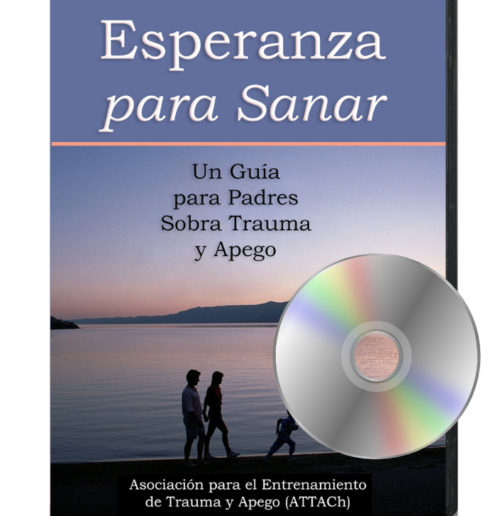 Este disco de 6 horas sigue los temas presentados en el libro de ATTACh, Esperanza para Sanar, una guia para padres de ninos que tienen trastornos del apego.
 -
 by Robin Wall Kimmerer Drawing on her life as an indigenous scientist, and as a woman, Kimmerer shows how other living beings―asters and goldenrod, strawberries and squash, salamanders, algae, and sweetgrass―offer us gifts and lessons, even if we've forgotten how to hear their voices. In reflections that range from the creation of Turtle Island to the forces that threaten its flourishing today, she circles toward a central argument: that the awakening of ecological consciousness requires the acknowledgment and celebration of our reciprocal relationship with the rest of the living world. For only when we can hear the languages of other beings will we be capable of understanding the generosity of the earth, and learn to give our own gifts in return.
 -
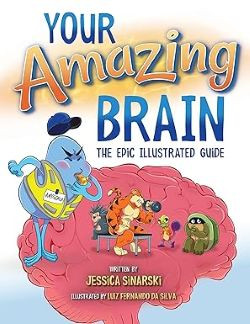 Help Manage Behavior by Understanding How the Brain Works by Jessica Sinarski, illustrated by Luiz Fernando Da Silva Faster than a speeding car! Stronger than a supercomputer! Are you ready to harness the power of your amazing brain? Get the inside scoop on why we do what we do! In this book, you'll discover:
- engaging visuals explaining brain cell and nervous system basics
- the surprising role of our eight senses - yes, there are more than five!
- differences between the two brain "teams" and the ways they impact behavior
- proven strategies for helping our rational "upstairs brain" run the show
- simple brain-boosting ideas for all ages
-
 by Mary Lyons WISDOM LESSONS, by Ojibwe Great-grandmother Mary Lyons, is the culmination of a lifetime steeped in indigenous spiritual traditions, as well as the proverbial school of hard knocks. At once plainspoken and lyrical, Grandmother Mary offers invaluable lessons for anyone interested in living in alignment with their higher self. A spiritual advisor, storyteller and wisdom keeper, she travels and teaches internationally, with a focus on healing children, families and communities from the negative effects of alcohol and drug addiction. After her own recovery, guided by her ancestors, she has dedicated her life to helping others, fostering and adopting many children with family problems, disabilities and fetal alcohol syndrome.
 -
 by Robyn Gobbel "All behavior makes sense" '"It most certainly does not!", is probably your first reaction. Parenting and neuroscience expert Robyn Gobbel is here to reveal how all behavior, no matter how baffling, can be explained and remedied. You just need to look past the behavior and understand what's going on inside. Robyn decodes the latest brain science into easy-to-understand principles and metaphors to help you become an expert in your child's behavior. She reveals simple ways to help you regulate and connect with your child, with brain-, body- and sensory-based strategies to overcome day-to-day challenges. She also provides you with the knowledge to understand and regulate your own brain so that you don't flip your lid when your child flips theirs. Let this be your lifeline for parenting or caring for any child with baffling behaviors and hidden challenges, including kids who have experienced adversity, or with additional needs.
 -
 Bridging the gap between research, science, and the therapy room. by Stephen W. Porges PhD When The Polyvagal Theory was published in 2011, it took the therapeutic world by storm, bringing Stephen Porges’s insights about the autonomic nervous system to a clinical audience interested in understanding trauma, anxiety, depression and other mental health issues. The book made accessible to clinicians and other professionals a polyvagal perspective that provided new concepts and insights for understanding human behavior. The perspective placed an emphasis on the important link between psychological experiences and physical manifestations in the body. That book was brilliant but also quite challenging to read for some. Since publication of that book, Stephen Porges has been urged to make these ideas more accessible and The Pocket Guide to the Polyvagal Theory is the result. Constructs and concepts embedded in polyvagal theory are explained conversationally in The Pocket Guide and there is an introductory chapter which discusses the science and the scientific culture in which polyvagal theory was originally developed. Publication of this work enables Stephen Porges to expand the meaning and clinical relevance of this groundbreaking theory. ---
 -
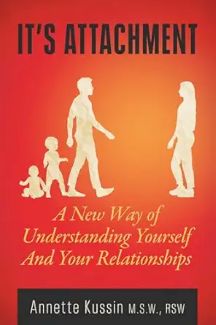 A New Way of Understanding Yourself and Your Relationships by Annette Kussin M.S.W. RSW How do we make sense of our relationships -- successes and failures, preferences and challenges, past and present. And after we make sense of them all -- what do we do to increase the successes that we are striving to attain. In It's Attachment, Kussin offers us a comprehensive overview of this dominant theory of human development and relationships in a way that gives us both understanding and practical ideas for constructive changes. She shows us the central features of the main attachment patterns that are present throughout childhood and adulthood as well as clear suggestions for how we might identify what pattern characterizes our own life. From there, her book provides practical insights into how our attachment pattern is central in our choosing a partner and being a parent. It also explores how we might change our pattern toward one that provides the greatest likelihood for developing an autonomous sense of self and satisfying reciprocal relationships.
 -
 by Allison Davis Maxon, illustrated by Liza Stevens Based on the pioneering Seven Core Issues model, this resource is an accessible and age-appropriate way to support children and teens who have experienced early adversity, to strengthen understanding and healing. The Seven Core Issues are Loss, Rejection, Shame/Guilt, Grief, Identity, Intimacy and Mastery/Control. This resource combines two separate interactive workbooks - one for children developmentally aged 5-11, the other for children developmentally aged 12+. These can be filled in, photocopied or downloaded and provide a structured way for children and teens to explore their feelings and beliefs using exercises and activities. An ideal accompaniment to the Seven Core Issues Workbook for Parents of Traumatized Children and Teens, this resource will be valued by all adults supporting children who have experienced early adversity.