-
 by Joe Brummer & Margaret Thorsborne Maybe you have heard the terms 'trauma-informed' and 'restorative' - but how do you go about becoming a trauma-informed, restorative educator? This practical book outlines the values, ideas and neuroscience behind trauma-informed restorative practice and its proven effectiveness. It clearly explains key theories relating to shame, trauma and your autonomic nervous system, and explains how to apply this knowledge in practice. Examples and stories of restorative practice feature throughout to inspire and emulate, as do practical protocols, tools and systems to develop your skills as a trauma-informed educator. Critically, it also explains the personal and professional qualities you need to nurture to truly engage in trauma-informed, restorative practice, with reflection points to aid learning and self-development. Read this book and take your first steps to creating a trauma-informed, restorative classroom - even if your school isn't doing it!
 -
 Arthur Becker-Weidman, PhD This two-DVD set (approximately three hours) explains how to assess children for Complex Trauma and disorders of attachment. The set contains:
- Introduction and overview of Complex Trauma and Disorders of Attachment
- Complex Post Traumatic Stress Disorder defined
- Effects of trauma on development
- Domains of impairment caused by trauma
- Differential diagnosis
- Video tape of children being assessed
- Useful tests and measures such as the Attachment Story Completion Test and others
- Complete PowerPoint Presentation slides.
-
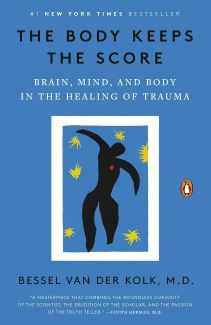 by Bessel van der Kolk M.D. Trauma is a fact of life. Veterans and their families deal with the painful aftermath of combat; one in five Americans has been molested; one in four grew up with alcoholics; one in three couples have engaged in physical violence. Dr. Bessel van der Kolk, one of the world’s foremost experts on trauma, has spent over three decades working with survivors. In The Body Keeps the Score, he uses recent scientific advances to show how trauma literally reshapes both body and brain, compromising sufferers’ capacities for pleasure, engagement, self-control, and trust. He explores innovative treatments—from neurofeedback and meditation to sports, drama, and yoga—that offer new paths to recovery by activating the brain’s natural neuroplasticity. Based on Dr. van der Kolk’s own research and that of other leading specialists, The Body Keeps the Score exposes the tremendous power of our relationships both to hurt and to heal—and offers new hope for reclaiming lives.
 -
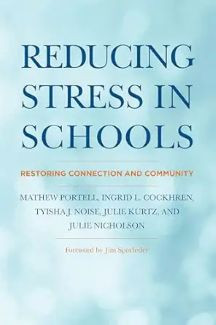 by Mathew Portell, Ingrid L. Cockhren, Tyisha J. Noise, Julie Kurtz, & Julie Nicholson In Reducing Stress in Schools, Mathew Portell, Ingrid L. Cockhren, Tyisha J. Noise, Julie Kurtz, and Julie Nicholson provide a toolkit of actionable, evidence-based practices for PreK–12 teachers, administrators, and staff to support students’ and adults’ nervous system regulation. Rooted in the tenets of trauma-responsive education and current neuroscience, these strategies address stress-related behavioral challenges present in schools, including fight, flight, freeze, and fawn behaviors. Unique in its approach, this book raises awareness of the collective trauma caused by the pandemic, highlights the effects of racial and historical trauma, draws attention to educators' stress and burnout, and proposes strategies for stress reduction drawn from a diverse range of practitioner experience. The authors show that, in the post-COVID-19 era, as students and educators contend with unprecedented exposure to mental health stressors, research supports classroom management via relationship-building interventions. They demonstrate how alternatives to exclusionary discipline practices can promote social-emotional learning, counter learning loss, and improve student skills such as sensory literacy, resilience, and frustration tolerance. This work delivers clear guidance throughout chapters that feature real-world case studies, sample conversations, and questions for reflection and discussion. It also includes recommendations for countering resistance to the implementation of trauma-responsive practices for classroom management. Ultimately, it gives educators the tools to build schools that reduce stress and strengthen racial justice, equity, healing, and safety.
 -
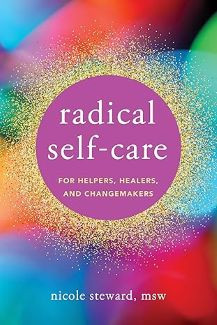 by Nicole Steward Solutions for tackling the deeply-rooted causes of burnout. Radical Self-Care for Helpers, Healers, and Changemakers addresses the constant exposure to heartbreak and injustice that can take a toll on the mental and physical health of those in the helping professions. After more than twenty years as a social worker, author Nicole Steward shares her own challenges with burnout and offers practical solutions to tackle the deeply-rooted causes of overwhelm that helpers face, which include compassion fatigue, vicarious trauma, and moral injury. Steward’s solutions go beyond mere stress-reduction techniques; rather, she offers a framework for engaging in radical self-care. Here readers will discover a way of being that prioritizes helpers and healers, so they can better serve others without sacrificing their own health and wellness. This book offers foundational strategies that challenge the current systems that contribute to the high rates of burnout and turnover in the human and social service professions. By taking radical care of themselves, helpers can take a more effective and resilient approach to their work, ultimately leading to liberation for both themselves and those they serve.
 -
 by Dr. Barbara Sorrels and Cathy Chalmers, M.A. Once you understand attachment, parenting makes a lot more sense. The basics of child development, and the importance of attachment, will equip you to create meaningful and secure relationships that last a lifetime. You’ll discover:
- What is healthy attachment How to nurture connection in various ages and stages
- The crucial differences between punishment and discipline
- How child development research aligns with biblical truth
-
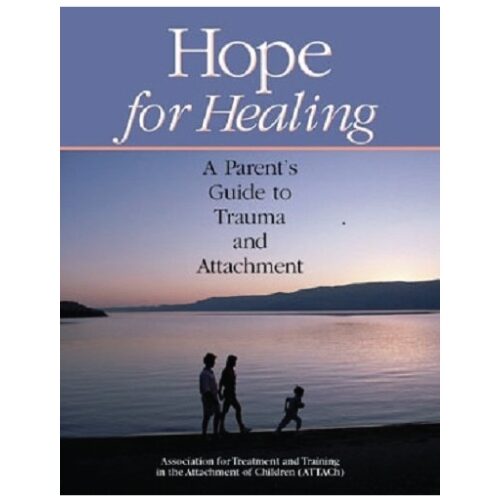 If you are a parent, or you are supporting a parent, whose child experienced trauma or neglect in early childhood, Hope for Healing: A Parent’s Guide to Trauma and Attachment may hold the answers to many of your questions. This thoughtful guide, written by therapists and parents who live and work with children who have a disorder or disturbance of attachment, will help parents, family members, educators, and others learn to support children on their path to healthy, loving and trusting relationships. The six-hour DVD was designed to be used in support group settings and by therapists in the training of caretakers.
 -
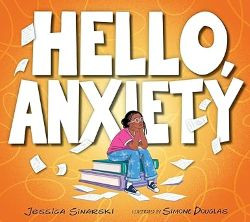 Help Kids Build Self-Confidence and Resilience by Jessica Sinarski, illustrated by Simone Douglas Destiny Davis carries more than just schoolbooks in her backpack. Her constant companion, Anxiety, makes everyday tasks feel impossibly hard. But when a big class project sends Destiny into a full-blown spiral, her dad steps in with a surprising solution - and a reminder that even the toughest challenges can be faced head on. This heartwarming story will help kids:
- Understand the brain science behind anxiety
- Experiment with helpful coping strategies
- Build self-confidence and resilience
-
 by Angela Tucker An adoption expert and transracial adoptee herself examines the unique perspectives and challenges these adoptees have as they navigate multiple cultures “Your parents are so amazing for adopting you! You should be grateful that you were adopted.” Angela Tucker is a Black woman, adopted from foster care by white parents. She has heard this microaggression her entire life, usually from well-intentioned strangers who view her adoptive parents as noble saviors. She is grateful for many aspects of her life, but being transracially adopted involves layers of rejection, loss, and complexity that cannot be summed up so easily. In “You Should Be Grateful,” Tucker centers the experiences of adoptees to share deeply personal stories, well-researched history, and engrossing anecdotes from mentorship sessions with adopted youth. These perspectives challenge the fairy-tale narrative of adoption, giving way to a fuller story that explores the impacts of racism, classism, family, love, and belonging.
 -
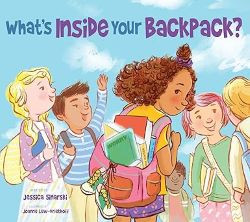 Teach Resilience and Practical Strategies to Cope with Trauma by Jessica Sinarski, illustrated by Joanne Lew-Vriethoff All around us, children are carrying backpacks that are heavy with more than just textbooks. Each day, they also bear the weight of difficult life experiences and intense feelings. Zoey Harmon just wants to feel light-hearted and carefree. Unfortunately, she keeps getting weighed down by pesky "books" in her backpack, like Worry and Shame. Much to her surprise, she's not the only one! Zoey learns that the adults in her life deal with difficult feelings too! Luckily, they have some ideas that can help her set aside the books she's not meant to carry. Will it be enough to help her unload the heaviest book of all? "You look a little worried, kiddo," Zoey's mom said, giving her a squeeze. "Sometimes I need a bright thought to help me when I'm feeling upset. Here, try this." She slid a bookmark into Zoey's hand. Zoey looked down and read: Imagine with Hope. "What's this?" asked Zoey. "When we don't know what to expect, worry wants us to imagine with fear, to think about all the worst possibilities. This is a little reminder I use to think of the good things that might happen when I imagine with hope instead." While there are no quick fixes for all of life's complex problems, What's Inside Your Backpack? highlights some of the ways we can nurture resilience in body and mind. Using the metaphor of books and bookmarks, author Jessica Sinarski offers gentle, effective strategies to help children impacted by trauma. By sharing their burdens with people they trust, kids can lighten their load and realize just how strong and courageous they really are!
 -
 by Sharon Kaplan Roszia and Allison Davis Maxon Based on a hugely successful US model, the Seven Core Issues in Adoption is the first conceptual framework of its kind to offer a unifying lens that was inclusive of all individuals touched by the adoption experience. The Seven Core Issues are Loss, Rejection, Shame/Guilt, Grief, Identity, Intimacy, and Mastery/Control. The book expands the model to be inclusive of adoption and all forms of permanency: adoption, foster care, kinship care, donor insemination and surrogacy. Attachment and trauma are integrated with the Seven Core Issues model to address and normalize the additional tasks individuals and families will encounter. The book views the Seven Core Issues from a range of perspectives including: multi-racial, LGBTQ, Hispanic, Asian, Native American, African-American, International, openness, search and reunion, and others. This essential guide introduces each Core Issue, its impact on individuals, offering techniques for growth and healing.