-
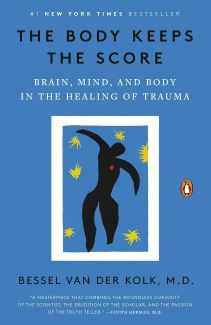 by Bessel van der Kolk M.D. Trauma is a fact of life. Veterans and their families deal with the painful aftermath of combat; one in five Americans has been molested; one in four grew up with alcoholics; one in three couples have engaged in physical violence. Dr. Bessel van der Kolk, one of the world’s foremost experts on trauma, has spent over three decades working with survivors. In The Body Keeps the Score, he uses recent scientific advances to show how trauma literally reshapes both body and brain, compromising sufferers’ capacities for pleasure, engagement, self-control, and trust. He explores innovative treatments—from neurofeedback and meditation to sports, drama, and yoga—that offer new paths to recovery by activating the brain’s natural neuroplasticity. Based on Dr. van der Kolk’s own research and that of other leading specialists, The Body Keeps the Score exposes the tremendous power of our relationships both to hurt and to heal—and offers new hope for reclaiming lives.
 -
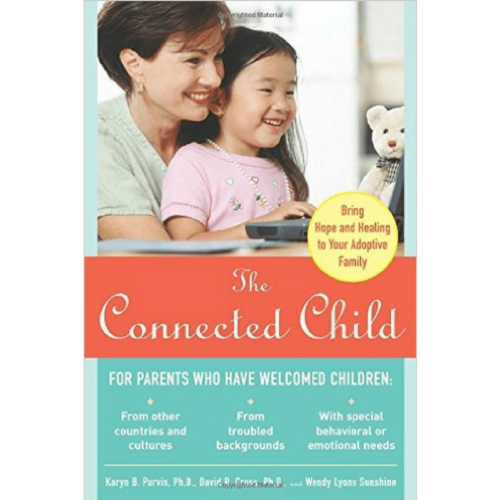 Karyn B. Purvis, David R. Cross & Wendy Lyons Sunshine The adoption of a child is always a joyous moment in the life of a family. Some adoptions, though, present unique challenges. Welcoming these children into your family--and addressing their special needs--requires care, consideration, and compassion. Written by two research psychologists specializing in adoption and attachment, The Connected Child will help you:
- Build bonds of affection and trust with your adopted child
- Effectively deal with any learning or behavioral disorders
- Discipline your child with love without making him or her feel threatened
-
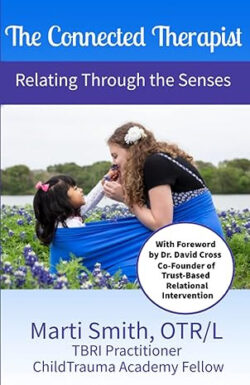
 by Marti Smith, OTR/L, TBRI Practitioner, ChildTrauma Academy Fellow A book about an OT who studied Dr. Bruce Perry's work and Trust Based Relational Intervention (TBRI) and found healing for her own family and the families she serves. In this three part book, Marti discusses how trauma aware research transformed her own therapy practice from behavior to connection focus. The senses are explored in relation to how adverse experience shapes our preferences and sensory processing abilities. The final section reveals resources and practical strategies to help select best practice sensory based strategies to promote healing through activity. Buy on Amazon
 -
 T. Berry Brazelton, M.D. & Stanley I. Greenspan, M.D. What do babies and young children really need? For the first time, two famed advocates for children cut through all the theories, platitudes, and controversies that surround parenting advice to define what every child must have in the first years of life. They lay out the seven irreducible needs of any child, in any society, and confront such thorny questions as: How much time do children need one-on-one with a parent? What is the effect of shifting caregivers, of custody arrangements? Why are we knowingly letting children fail in school? Nothing is off limits. This short, hard-hitting book, the fruit of decades of experience and caring, sounds a wake-up call for parents, teachers, judges, social workers, policy makers-anyone who cares about the welfare of children. A Merloyd Lawrence Book Buy on Amazon
 -

by Stephen W. Porges PhD This book compiles, for the first time, Stephen W. Porges’s decades of research. A leading expert in developmental psychophysiology and developmental behavioral neuroscience, Porges is the mind behind the groundbreaking Polyvagal Theory, which has startling implications for the treatment of anxiety, depression, trauma, and autism. Adopted by clinicians around the world, the Polyvagal Theory has provided exciting new insights into the way our autonomic nervous system unconsciously mediates social engagement, trust, and intimacy.
-
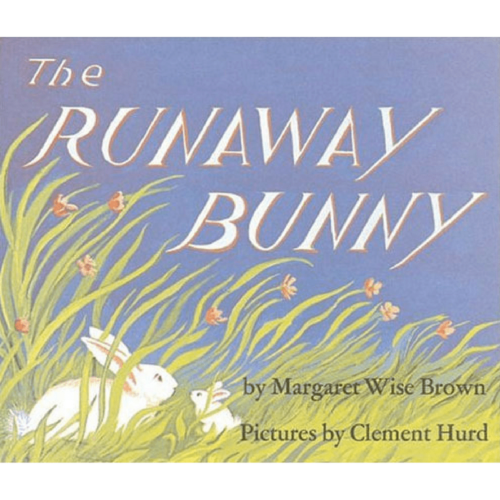
by Margaret Wise-Brown, illustrated by Clement Hurd “If you run away,” said his mother, “I will run after you. For you are my little bunny.” A little bunny keeps running away from his mother in this imaginary game of hide-and-seek. Children will be profoundly comforted by this lovingly steadfast mother who finds her child every time. The Runaway Bunny, first published in 1942 and never out of print, has indeed become a classic. Generations of readers have fallen in love with the gentle magic of its reassuring words and loving pictures.
-
 by Sharon Kaplan Roszia and Allison Davis Maxon Based on a hugely successful US model, the Seven Core Issues in Adoption is the first conceptual framework of its kind to offer a unifying lens that was inclusive of all individuals touched by the adoption experience. The Seven Core Issues are Loss, Rejection, Shame/Guilt, Grief, Identity, Intimacy, and Mastery/Control. The book expands the model to be inclusive of adoption and all forms of permanency: adoption, foster care, kinship care, donor insemination and surrogacy. Attachment and trauma are integrated with the Seven Core Issues model to address and normalize the additional tasks individuals and families will encounter. The book views the Seven Core Issues from a range of perspectives including: multi-racial, LGBTQ, Hispanic, Asian, Native American, African-American, International, openness, search and reunion, and others. This essential guide introduces each Core Issue, its impact on individuals, offering techniques for growth and healing.
 -
 by Allison Davis Maxon, illustrated by Liza Stevens Based on the pioneering Seven Core Issues model, this resource is an accessible and age-appropriate way to support children and teens who have experienced early adversity, to strengthen understanding and healing. The Seven Core Issues are Loss, Rejection, Shame/Guilt, Grief, Identity, Intimacy and Mastery/Control. This resource combines two separate interactive workbooks - one for children developmentally aged 5-11, the other for children developmentally aged 12+. These can be filled in, photocopied or downloaded and provide a structured way for children and teens to explore their feelings and beliefs using exercises and activities. An ideal accompaniment to the Seven Core Issues Workbook for Parents of Traumatized Children and Teens, this resource will be valued by all adults supporting children who have experienced early adversity.
 -
 By Sharon Roszia and Allison Davis Maxon Based on a hugely successful US model, The Seven Core Issues Workbook is accessible and parent-friendly with brief explanations, activities and exercises. The Seven Core Issues are Loss, Rejection, Shame/Guilt, Grief, Identity, Intimacy and Mastery/Control. The workbook gives parents the ability to explore their own issues as well as their child's through varies experiential exercise and activities. Parents can identify and address their core issues in order to more effectively assist and support the child's core issues. The workbook and its exercises allow for a variety of diverse groups to use the book with ease, making it the essential tool for all individuals to grow and heal themselves and their families.
 -
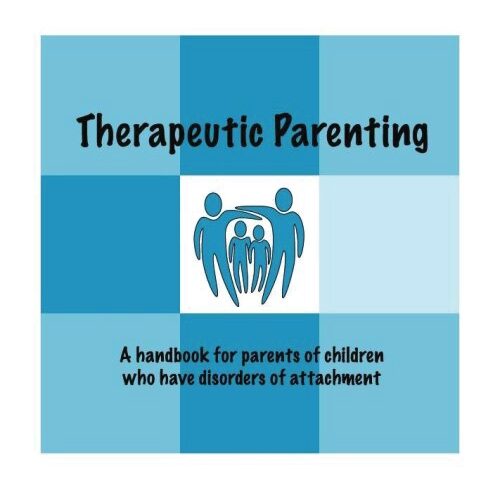 Developed specifically for parents and caregivers of children who have disorders of attachment, this guide is a great place to start for understanding treatment, terms and more.
 -
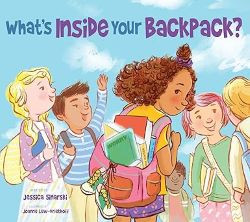 Teach Resilience and Practical Strategies to Cope with Trauma by Jessica Sinarski, illustrated by Joanne Lew-Vriethoff All around us, children are carrying backpacks that are heavy with more than just textbooks. Each day, they also bear the weight of difficult life experiences and intense feelings. Zoey Harmon just wants to feel light-hearted and carefree. Unfortunately, she keeps getting weighed down by pesky "books" in her backpack, like Worry and Shame. Much to her surprise, she's not the only one! Zoey learns that the adults in her life deal with difficult feelings too! Luckily, they have some ideas that can help her set aside the books she's not meant to carry. Will it be enough to help her unload the heaviest book of all? "You look a little worried, kiddo," Zoey's mom said, giving her a squeeze. "Sometimes I need a bright thought to help me when I'm feeling upset. Here, try this." She slid a bookmark into Zoey's hand. Zoey looked down and read: Imagine with Hope. "What's this?" asked Zoey. "When we don't know what to expect, worry wants us to imagine with fear, to think about all the worst possibilities. This is a little reminder I use to think of the good things that might happen when I imagine with hope instead." While there are no quick fixes for all of life's complex problems, What's Inside Your Backpack? highlights some of the ways we can nurture resilience in body and mind. Using the metaphor of books and bookmarks, author Jessica Sinarski offers gentle, effective strategies to help children impacted by trauma. By sharing their burdens with people they trust, kids can lighten their load and realize just how strong and courageous they really are!