-
 A young boy learns to validate and accept his feelings as he comes to understand the different parts of himself. by Richard Schwartz, Ph.D. and Bethany Hegedus; illustrated by Kate Fedos As a boy goes through his day, he encounters all sorts of people and experiences. He reacts differently depending on the situation. Whether it’s The Manager who takes charge and organizes, The Exile who makes himself small and disappears, or The Firefighter who employs a lot of noise and distractions, each of these “parts” is useful in helping him cope. Based on the popular teachings of the Internal Family Systems (IFS) model of therapy developed by Dr. Richard Schwartz, this book is not only a great introduction to our feelings and behaviors but a way for all kids to talk about what they are experiencing. Children will learn to accept all parts of themselves and understand that within us there are no bad parts!
 -
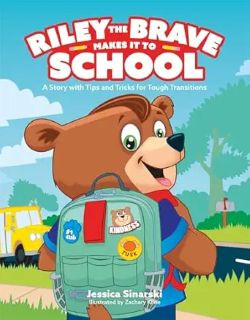
by Jessica Sinarski, illustrated by Zachary Kline "I'm NOT going to school today!" Riley the Brave is a little bear with big feelings. Some days he wakes up feeling cheerful and ready to brave the day. He has energy to get dressed, eat breakfast and have some fun! But some days he wakes up feeling like a grumpy porcupine. His brow is scrunched and he thinks that it is going to be a terrible day. Today, Riley is having one of those days! What can be done to help him? All children struggle to make it to school some days, and this can be even tougher for children who have had difficult life experiences and extra challenges at school. This book creates a safe space for conversations about big thoughts and feelings, and offers positive tips for families to try. It also features an educational afterword for grown-ups which explains how the book helps children, and how to get the most out of it.
-
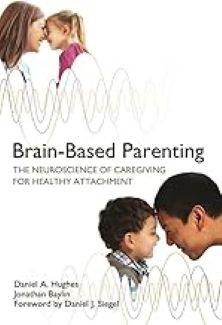 by Daniel A Hughes & Jonathan Baylin An attachment specialist and a clinical psychologist with neurobiology expertise team up to explore the brain science behind parenting. In this groundbreaking exploration of the brain mechanisms behind healthy caregiving, attachment specialist Daniel A. Hughes and veteran clinical psychologist Jonathan Baylin guide readers through the intricate web of neuronal processes, hormones, and chemicals that drive―and sometimes thwart―our caregiving impulses, uncovering the mysteries of the parental brain. The biggest challenge to parents, Hughes and Baylin explain, is learning how to regulate emotions that arise―feeling them deeply and honestly while staying grounded and aware enough to preserve the parent–child relationship. Stress, which can lead to “blocked” or dysfunctional care, can impede our brain’s inherent caregiving processes and negatively impact our ability to do this. While the parent–child relationship can generate deep empathy and the intense motivation to care for our children, it can also trigger self-defensive feelings rooted in our early attachment relationships, and give rise to “unparental” impulses. Learning to be a “good parent” is contingent upon learning how to manage this stress, understand its brain-based cues, and respond in a way that will set the brain back on track. To this end, Hughes and Baylin define five major “systems” of caregiving as they’re linked to the brain, explaining how they operate when parenting is strong and what happens when good parenting is compromised or “blocked.” With this awareness, we learn how to approach kids with renewed playfulness, acceptance, curiosity, and empathy, re-regulate our caregiving systems, foster deeper social engagement, and facilitate our children’s development. Infused with clinical insight, illuminating case examples, and helpful illustrations, Brain-Based Parenting brings the science of caregiving to light for the first time. Far from just managing our children’s behavior, we can develop our “parenting brains,” and with a better understanding of the neurobiological roots of our feelings and our own attachment histories, we can transform a fraught parent-child relationship into an open, regulated, and loving one.
 -
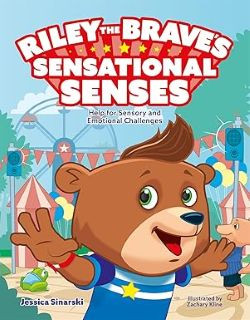
by Jessica Sinarski, illustrated by Zachary Kline Riley the Brave is a little bear with big feelings. He really wants to have fun at the fair, but sometimes he struggles just making it to school, especially on the STINKY, BUMPY, NOISY bus! It is hard for Riley to focus and have fun when he is feeling so many confusing sensations! He has porcupine moments and grumps at his friends, or turtle moments when he just wants to be alone. He even had a tiger moment, roaring at his teacher. With all these big feelings, how can he ever go to the fair? Riley the Brave's Sensational Senses teaches children about their senses through a playful story with real-life strategies for emotion regulation. It also features an educational afterword for grown-ups that explains our eight senses and includes tips for getting the most out of the book.
-
 How Inherited Family Trauma Shapes Who We Are and How to End the Cycle by Mark Wolynn It Didn’t Start With You and its companion, The Official It Didn't Start with You Workbook, provide a groundbreaking approach to transforming traumatic legacies passed down in families over generations, by an acclaimed expert in the field Depression. Anxiety. Chronic Pain. Phobias. Obsessive thoughts. The evidence is compelling: the roots of these difficulties may not reside in our immediate life experience or in chemical imbalances in our brains—but in the lives of our parents, grandparents, and even great-grandparents. The latest scientific research, now making headlines, supports what many have long intuited—that traumatic experience can be passed down through generations. It Didn’t Start with You builds on the work of leading experts in post-traumatic stress, including Mount Sinai School of Medicine neuroscientist Rachel Yehuda and psychiatrist Bessel van der Kolk, author of The Body Keeps the Score. Even if the person who suffered the original trauma has died, or the story has been forgotten or silenced, memory and feelings can live on. These emotional legacies are often hidden, encoded in everything from gene expression to everyday language, and they play a far greater role in our emotional and physical health than has ever before been understood. As a pioneer in the field of inherited family trauma, Mark Wolynn has worked with individuals and groups on a therapeutic level for over twenty years. It Didn’t Start with You offers a pragmatic and prescriptive guide to his method, the Core Language Approach. Diagnostic self-inventories provide a way to uncover the fears and anxieties conveyed through everyday words, behaviors, and physical symptoms. Techniques for developing a genogram or extended family tree create a map of experiences going back through the generations. And visualization, active imagination, and direct dialogue create pathways to reconnection, integration, and reclaiming life and health. It Didn’t Start With You is a transformative approach to resolving longstanding difficulties that in many cases, traditional therapy, drugs, or other interventions have not had the capacity to touch.
 -
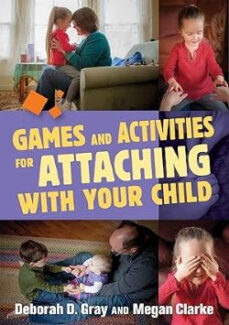
 by Deborah D. Gray and Megan Clarke Packed full of great ideas for fun games and activities, this book encourages positive attachments between a parent or carer and their child. When it comes to choosing the best games to play with children who have difficulties attaching, it is often hard to know how to play with a purpose. This book contains fun, age-appropriate games along with an explanation of why they matter. All the games included are designed for specific age ranges, from infants to older children, and help to address particular needs in children that are known to affect attachment, including fetal alcohol spectrum disorder. It provides an easy-to-understand description of attachment and reveals the crucial role that play has in forming attachments. Written for parents and carers, as well as for use by professionals, it is full of strategies to help build healthy attachments in children who have experienced early trauma.
 -
 by Robbie Adler-Tapia (Author), Robbie - Adler-Tapia PhD (Editor) Expanded to include EMDR therapy with infants to adolescents, this updated and revised manual--the only resource of its kind--accompanies the new second edition of the widely praised foundational text, EMDR and the Art of Psychotherapy With Children. The manual distills simple and practical ways to employ EMDR therapy scripted protocols and forms to effectively utilize the entire EMDR therapy eight-phased treatment with infants, toddlers, young children, preteens, and teens from a developmental perspective. It is organized in accordance with the book and provides step-by-step directions, session protocols, scripts, and forms for each phase of the protocol, along with instructions for integrating techniques and tools from play, art, sand tray, and other helpful therapies. The manual mirrors revisions to the text including changes to the phases of EMDR therapy and target identification and the integration of developmental theory into EMDR therapy for use with infants to adolescents. Additional revisions include coverage of new specialties and updated protocols, the presentation of breakthrough narrative concepts, new resources and scripts, guidance for the use of EMDR therapy with specialty populations, and new case studies of infants, toddlers, preteens, and adolescents. The manual will greatly assist therapists in their goal of providing best practices for children in need of expert psychotherapy.
 -
 by Stephen Porges PhD and Karen Onderko; Foreword by Peter A. Levine PhD We all want to live and share our truth, but when we don’t feel safe, it can be impossible to fully express or even know who we really are. The nervous system impacts daily well-being, to our benefit or detriment. Understanding how may be key to truly knowing yourself and better supporting the challenges holding you back. “When the nervous system regains its capacity to feel safe,” say Porges and Onderko, “individuals can express themselves genuinely, engage comfortably with others, and embrace a life of greater openness and ease.” The Safe and Sound Protocol (SSP) is a groundbreaking therapy based in Polyvagal Theory, which looks at the role the autonomic nervous system and vagus nerve play in regulating health and behavior. SSP involves listening to music that’s been filtered to prioritize frequencies of human speech, providing auditory input that enables the nervous system to reset to its homeostatic state. Porges and Onderko offer a glimpse into this innovative approach, highlighting not only the origin of SSP and its best practices but also real-life stories of transformation. They showcase clinical evidence demonstrating SSP’s impact on emotional dysregulation, social interaction difficulty, and auditory sensitivity, providing a comprehensive understanding of its therapeutic potential. Some features and conditions addressed include: • Depression • Perfectionism • Addiction • Suicidal ideation • COVID recovery • Navigating gender identity • Living with Parkinson’s disease • Hypermobility • Autism • ADHD • Dyslexia Whether patient, family member, friend, or clinician, you’ll find a deeper understanding of the nervous system and tools for a more resilient experience. Illustrating the incredible range of application and how autonomic regulation can lead to significant improvements―from stress and anxiety to grief and trauma―Safe and Sound demonstrates how SSP can promote a state of safety and calm, facilitating the foundation for long-awaited healing.
 -
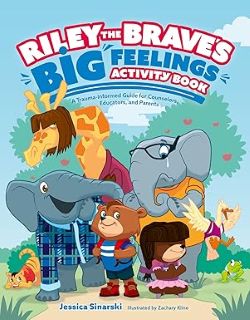
by Jessica Sinarski, illustrated by Zachary Kline
Roaring, grumping, knots in tummies...Making sense of big feelings can be tricky. Riley the Brave and his safe big critters are here to help! Enjoy 60+ fun activities and trauma-sensitive strategies to help children understand the brain science behind those big MAD, SAD, and SCARED emotions...and what to do about it! Bright illustrations and familiar characters encourage children as they dig into their prickly porcupine moments, timid turtle moments, and all the feelings in between. An introduction for grown-ups will help you make the most of this treasure trove of games, printable masks, colorful cards, word searches, action plans, and more! Work one-on-one or easily adapt these strength-based activities for group settings. Lesson plans and frequent "Try This!" sections make this the ultimate resource for parents, teachers, counselors, and anyone else supporting children with big feelings. -
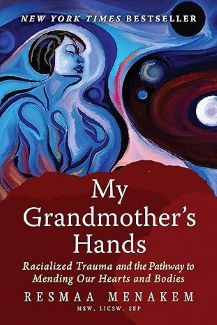 by LICSW Resmaa Menakem, MSW In this groundbreaking book, therapist Resmaa Menakem examines the damage caused by racism in America from the perspective of trauma and body-centered psychology. The body is where our instincts reside and where we fight, flee, or freeze, and it endures the trauma inflicted by the ills that plague society. Menakem argues this destruction will continue until Americans learn to heal the generational anguish of white supremacy, which is deeply embedded in all our bodies. Our collective agony doesn't just affect African Americans. White Americans suffer their own secondary trauma as well. So do blue Americans—our police. My Grandmother's Hands is a call to action for all of us to recognize that racism is not only about the head, but about the body, and introduces an alternative view of what we can do to grow beyond our entrenched racialized divide. Paves the way for a new, body-centered understanding of white supremacy—how it is literally in our blood and our nervous system. Offers a step-by-step healing process based on the latest neuroscience and somatic healing methods, in addition to incisive social commentary.
 -
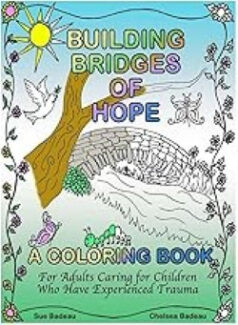
 by Sue Badeau, illustrated by Chelsea Badeau “Building Bridges of Hope” is a coloring book for adults caring for children who have experienced trauma. Within these pages you will find whimsical, calming and inspiring artwork to color while learning about the short and long term effects of trauma on children and what you can do to make a difference. The text pages, facing each of the art pages, provide effective strategies, tips and tools for helping children as they journey from the pain, confusion and stress often associated with trauma to the hope and well-being associated with healing. The author/illustrator team also has a companion book for children entitled Bubbles & Butterflies. Drawing from her academic background in child development, professional experiences in the child welfare and juvenile justice systems and personal experience raising 22 children, many of whom experienced significant early life trauma, Sue offers a unique combination of clinical and research-based expertise with practical, down-to-earth approaches that busy parents can implement with minimal investment of time and money. The lessons, strategies and activities suggested in this book have been tried and tested by parents, caregivers and professionals from diverse backgrounds and all walks of life. Throughout the book, research and resources are highlighted. Citations and more information about all of the resources mentioned can be found at the end of the book. The simple artwork has been designed to seed and inspire the reader’s own creativity. Several blank pages have been included where you can respond to the messages in the text with ideas and images of your own. Pulling together her own unique designs with artwork created by several of her siblings and nieces, artist Chelsea Badeau draws on her professional background in the communications arena and years of community service with children to create a unified collection of healing images.
 -
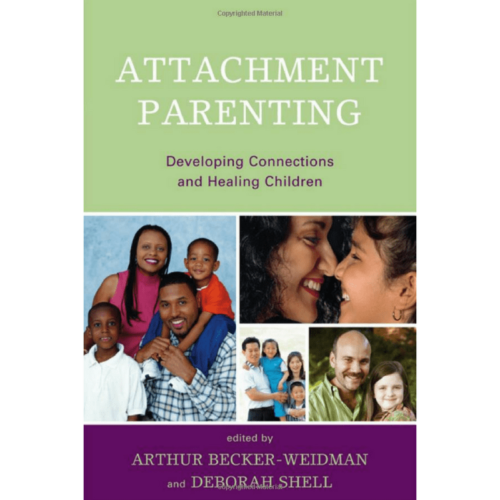 Editors Arthur Becker-Weidman, Ph.D. & Deborah Shell, MA Attachment Parenting describes a comprehensive approach to parenting children who have a history of neglect, abuse, orphanage care, or other experiences that may interfere with the normal development of attachment between parent and child. Grounded in attachment theory, Attachment Parenting gives parents, therapists, educators, and child-welfare and residential-treatment professionals the tools and skills necessary to help these children.... Buy on Amazon