-
 by LICSW Resmaa Menakem, MSW In this groundbreaking book, therapist Resmaa Menakem examines the damage caused by racism in America from the perspective of trauma and body-centered psychology. The body is where our instincts reside and where we fight, flee, or freeze, and it endures the trauma inflicted by the ills that plague society. Menakem argues this destruction will continue until Americans learn to heal the generational anguish of white supremacy, which is deeply embedded in all our bodies. Our collective agony doesn't just affect African Americans. White Americans suffer their own secondary trauma as well. So do blue Americans—our police. My Grandmother's Hands is a call to action for all of us to recognize that racism is not only about the head, but about the body, and introduces an alternative view of what we can do to grow beyond our entrenched racialized divide. Paves the way for a new, body-centered understanding of white supremacy—how it is literally in our blood and our nervous system. Offers a step-by-step healing process based on the latest neuroscience and somatic healing methods, in addition to incisive social commentary.
 -
 by Richard Schwatrz PhD Discover an empowering new way of understanding your multifaceted mind―and healing the many parts that make you who you are. Is there just one “you”? We’ve been taught to believe we have a single identity, and to feel fear or shame when we can’t control the inner voices that don’t match the ideal of who we think we should be. Yet Dr. Richard Schwartz’s research now challenges this “mono-mind” theory. “All of us are born with many sub-minds―or parts,” says Dr. Schwartz. “These parts are not imaginary or symbolic. They are individuals who exist as an internal family within us―and the key to health and happiness is to honor, understand, and love every part.” Dr. Schwartz’s Internal Family Systems (IFS) model has been transforming psychology for decades. With No Bad Parts, you’ll learn why IFS has been so effective in areas such as trauma recovery, addiction therapy, and depression treatment―and how this new understanding of consciousness has the potential to radically change our lives. Here you’ll explore: • The IFS revolution―how honoring and communicating with our parts changes our approach to mental wellness • Overturning the cultural, scientific, and spiritual assumptions that reinforce an outdated mono-mind model • The ego, the inner critic, the saboteur―making these often-maligned parts into powerful allies • Burdens―why our parts become distorted and stuck in childhood traumas and cultural beliefs • How IFS demonstrates human goodness by revealing that there are no bad parts • The Self―discover your wise, compassionate essence of goodness that is the source of healing and harmony • Exercises for mapping your parts, accessing the Self, working with a challenging protector, identifying each part’s triggers, and more IFS is a paradigm-changing model because it gives us a powerful approach for healing ourselves, our culture, and our planet. As Dr. Schwartz teaches, “Our parts can sometimes be disruptive or harmful, but once they’re unburdened, they return to their essential goodness. When we learn to love all our parts, we can learn to love all people―and that will contribute to healing the world.”
 -
 A young boy learns to validate and accept his feelings as he comes to understand the different parts of himself. by Richard Schwartz, Ph.D. and Bethany Hegedus; illustrated by Kate Fedos As a boy goes through his day, he encounters all sorts of people and experiences. He reacts differently depending on the situation. Whether it’s The Manager who takes charge and organizes, The Exile who makes himself small and disappears, or The Firefighter who employs a lot of noise and distractions, each of these “parts” is useful in helping him cope. Based on the popular teachings of the Internal Family Systems (IFS) model of therapy developed by Dr. Richard Schwartz, this book is not only a great introduction to our feelings and behaviors but a way for all kids to talk about what they are experiencing. Children will learn to accept all parts of themselves and understand that within us there are no bad parts!
 -
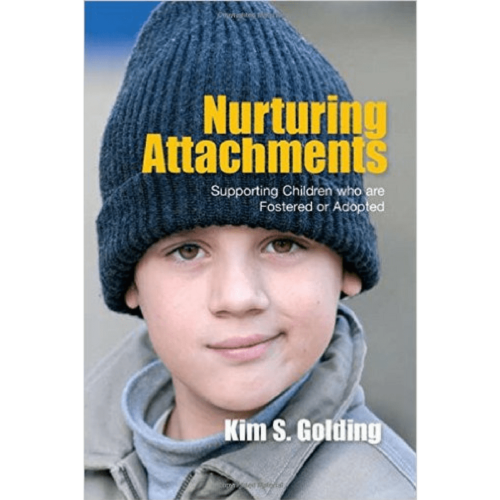 Kim S. Golding Nurturing Attachments combines the experience and wisdom of parents and carers with that of professionals to provide support and practical guidance for foster and adoptive parents looking after children with insecure attachment relationships. It gives an overview of attachment theory and a step-by-step model of parenting which provides the reader with a tried-and-tested framework for developing resilience and emotional growth. Featuring throughout are the stories of Catherine, Zoe, Marcus and Luke, four fictional children in foster care or adoptive homes, who are used to illustrate the ideas and strategies described. The book offers sound advice and provides exercises for parents and their children, as well as useful tools that supervising social workers can use both in individual support of carers as well as in training exercises. This is an essential guide for adoptive and foster parents, professionals including health and social care practitioners, clinical psychologists, child care professionals, and lecturers and students in this field. Buy on Amazon
 -
 by Dr. Barbara Sorrels and Cathy Chalmers, M.A. Once you understand attachment, parenting makes a lot more sense. The basics of child development, and the importance of attachment, will equip you to create meaningful and secure relationships that last a lifetime. You’ll discover:
- What is healthy attachment How to nurture connection in various ages and stages
- The crucial differences between punishment and discipline
- How child development research aligns with biblical truth
-
 Daniel A Hughes This book explores emotional and behavioral difficulties, a common diagnosis in looked after children. Dan Hughes shares his expertise on the symptoms, prognosis and treatment for affected children, with valuable advice on how parents and carers can help children to improve their behavior and increase their self-esteem. Buy on Amazon
 -
 by Mary D. Salter Ainsworth, Ph.D. Ethological attachment theory is a landmark of 20th century social and behavioral sciences theory and research. This new paradigm for understanding primary relationships across the lifespan evolved from John Bowlby’s critique of psychoanalytic drive theory and his own clinical observations, supplemented by his knowledge of fields as diverse as primate ethology, control systems theory, and cognitive psychology. By the time he had written the first volume of his classic Attachment and Loss trilogy, Mary D. Salter Ainsworth’s naturalistic observations in Uganda and Baltimore, and her theoretical and descriptive insights about maternal care and the secure base phenomenon had become integral to attachment theory. Patterns of Attachment reports the methods and key results of Ainsworth’s landmark Baltimore Longitudinal Study. Following upon her naturalistic home observations in Uganda, the Baltimore project yielded a wealth of enduring, benchmark results on the nature of the child’s tie to its primary caregiver and the importance of early experience. It also addressed a wide range of conceptual and methodological issues common to many developmental and longitudinal projects, especially issues of age appropriate assessment, quantifying behavior, and comprehending individual differences. In addition, Ainsworth and her students broke new ground, clarifying and defining new concepts, demonstrating the value of the ethological methods and insights about behavior. Today, as we enter the fourth generation of attachment study, we have a rich and growing catalogue of behavioral and narrative approaches to measuring attachment from infancy to adulthood. Each of them has roots in the Strange Situation and the secure base concept presented in Patterns of Attachment. It inclusion in the Psychology Press Classic Editions series reflects Patterns of Attachment’s continuing significance and insures its availability to new generations of students, researchers, and clinicians.
 -
 Bridging the gap between research, science, and the therapy room. by Stephen W. Porges PhD When The Polyvagal Theory was published in 2011, it took the therapeutic world by storm, bringing Stephen Porges’s insights about the autonomic nervous system to a clinical audience interested in understanding trauma, anxiety, depression and other mental health issues. The book made accessible to clinicians and other professionals a polyvagal perspective that provided new concepts and insights for understanding human behavior. The perspective placed an emphasis on the important link between psychological experiences and physical manifestations in the body. That book was brilliant but also quite challenging to read for some. Since publication of that book, Stephen Porges has been urged to make these ideas more accessible and The Pocket Guide to the Polyvagal Theory is the result. Constructs and concepts embedded in polyvagal theory are explained conversationally in The Pocket Guide and there is an introductory chapter which discusses the science and the scientific culture in which polyvagal theory was originally developed. Publication of this work enables Stephen Porges to expand the meaning and clinical relevance of this groundbreaking theory. ---
 -
 by Deb Dana Here, for the first time, is a layperson’s explanation of polyvagal theory, an approach to mental health and well-being that has taken the clinical world by storm. A polyvagal approach to life is based on the knowledge that the autonomic nervous system is shaped by early experience and reshaped with ongoing experience. This short book offers an overview for nonspecialist readers and provides a series of exercises and meditations (practices) that allow readers to tune into their nervous systems, providing calming prompts to build and strengthen ventral vagal connections. This book includes a never-before-published comprehensive chapter on polyvagal theory, preceded by exercises that focus on mapping, reflecting, listening, deepening, creating, and connecting. Readers who want to change a pattern and find new rhythm for their nervous systems can use this material to work toward those goals.
 -
 by Mathew Portell, Incrid L. Cockhren, Tyisha J. Noise, Julie Kurtz, Julie Nicholson
 -
Training for Parents and Professionals
2 Sessions of Training Starts: Tuesday, June 13, 2017 at 7:30 pm Central ** after adding, click on View Cart to complete payment